
Bates Air & Heat LLC
Heat Pump Repair in Riomar, FL
Contact Us Today
Riomar is one of Vero Beach's most distinctive neighborhoods, a barrier island community of well-maintained homes set between the Atlantic Ocean and the Indian River, where the landscape is shaped as much by water as by land. It is a place where people invest seriously in their properties and expect the professionals they hire to bring the same level of attention to their work. It is also a place where the ocean air is a constant presence, and that salt-laden environment is one of the most corrosive forces a heat pump can face. Bates Air and Heat is a veteran-owned HVAC company that understands what Riomar's coastal conditions do to mechanical equipment, and we bring that understanding to every service call we take in this neighborhood.
How Ocean Air Changes the Rules for Your Heat Pump
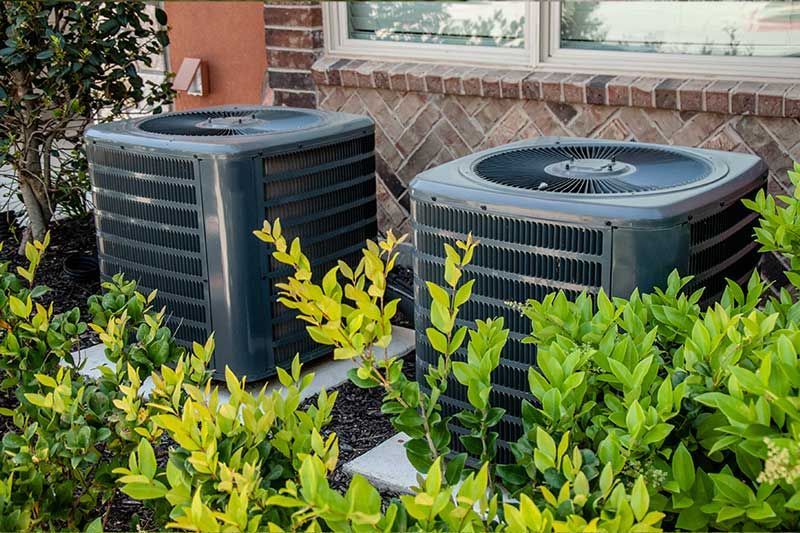
Riomar sits close enough to the Atlantic that the air moving through the neighborhood carries salt particles even on calm days. That exposure changes the timeline on virtually every component inside and outside a heat pump, compressing the window between installation and the first signs of corrosion-related wear. The signals that something is developing are worth catching early, because in a coastal environment problems that start small tend to escalate faster than they would in a more sheltered location. Watch for these:
- A gradual loss of cooling capacity that has developed over a season or two rather than arriving suddenly, which often points to slow refrigerant loss from corrosion-related leaks at fittings and coil connections.
- White or powdery residue visible on the outdoor unit's fins or refrigerant lines, which is a direct indicator of active salt corrosion on exposed metal surfaces.
- The system running longer cycles than it used to in order to reach the same indoor temperature, a sign that heat exchange efficiency has dropped as the coil surface has degraded.
- Unexplained increases in electricity consumption without any change in how the home is being used or occupied.
- Intermittent startup failures or hesitation when the system tries to begin a cooling cycle, often tied to contactor pitting from moisture and salt exposure in the outdoor electrical compartment.
- Indoor air that feels less fresh or carries a subtle odor when the system runs, which can indicate biological growth on a coil that is no longer shedding condensation as efficiently as it should.
In Riomar, staying ahead of these signals is not just about comfort. It is about protecting a significant investment in a home that deserves to be well maintained from the mechanical systems up.
What Sets Riomar Apart From Every Other Service Call We Make
Riomar occupies a narrow strip of barrier island land where ocean influence is not a seasonal variable but a permanent condition. The homes here are often substantial, with square footage and construction quality that reflect the neighborhood's character, and the HVAC systems serving them need to perform accordingly. Many of Riomar's residences were built or extensively renovated between the 1960s and the 1990s, which means mechanical systems of varying ages are operating in one of the most corrosive residential environments in Indian River County. The specific failure patterns we encounter in this neighborhood reflect both the architecture and the exposure:
- Aluminum condenser coil fins that have undergone progressive pitting and structural deterioration from salt-driven oxidation, reaching a point where fin restoration is no longer sufficient and coil replacement becomes the only path to restored performance.
- Formicary corrosion inside copper evaporator coil tubing, a failure mode driven by the interaction of salt air, ambient moisture, and organic compounds that is found almost exclusively in coastal residential settings.
- Outdoor electrical compartments where moisture intrusion has caused terminal corrosion severe enough to affect both contactor function and control board reliability.
- Refrigerant line sets running through crawl spaces or along exterior walls where the combination of ocean air and ground moisture has compromised both the copper and the insulation protecting it.
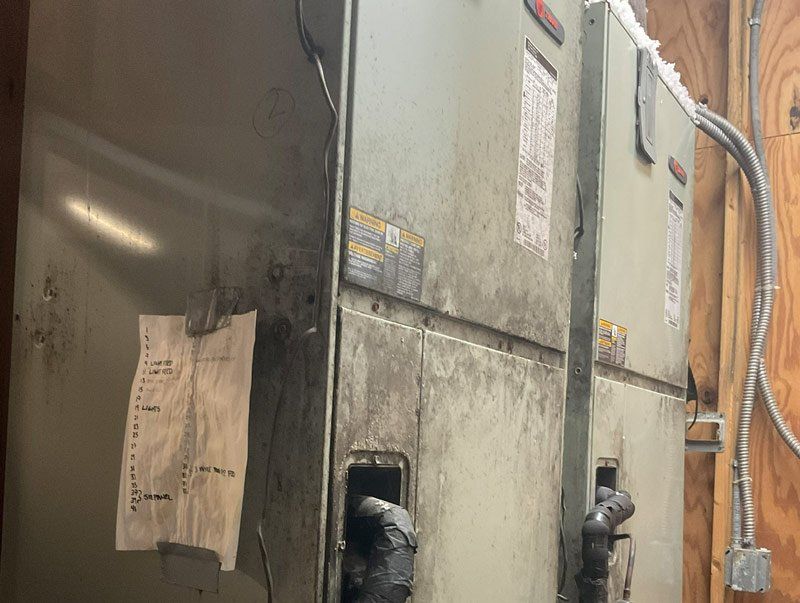
- Air handler cabinets in older homes where the original sheet metal has rusted through at the base, allowing conditioned air to escape into the mechanical room and reducing system efficiency in ways that are not always obvious from the outside.
- Drain systems processing unusually high condensate volumes from the elevated dew points that coastal living produces year-round, overwhelming drain lines sized for less humid assumptions.
Every one of these failure modes has a specific repair approach, and getting that approach right the first time in a neighborhood like Riomar is what separates a durable fix from a temporary one.
Coastal-Grade Repairs for a Neighborhood That Expects Quality
When we take a call in Riomar, we arrive knowing that the standard diagnostic checklist is a starting point, not a complete picture. Salt air corrosion is an active force in this neighborhood, and a repair that does not account for it is working against a condition that will keep producing the same failures until it is addressed properly. Our heat pump repair services are built around that reality:
- Full system diagnostics with explicit attention to corrosion-related wear at every external surface, fitting, and electrical connection the system has.
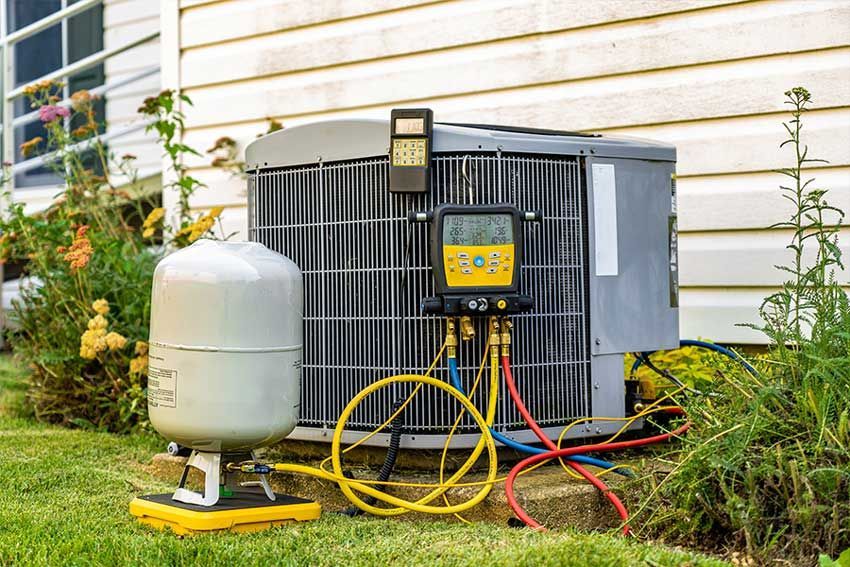
- Refrigerant leak detection using methods appropriate for coastal corrosion scenarios, including formicary pitting on interior copper tubing that standard leak detection can miss.
- Condenser coil evaluation with honest assessment of whether cleaning and fin restoration can recover performance or whether corrosion has advanced far enough to warrant coil replacement.
- Evaporator coil inspection for internal pitting, surface fouling, and the biological growth patterns that develop when condensation cycling is affected by corrosion.
- Outdoor electrical compartment assessment including terminal cleaning, contactor and capacitor replacement, and sealing recommendations to slow ongoing moisture intrusion.
- Refrigerant line set and insulation inspection along the full run, with replacement of compromised sections before they develop into active leaks.
- Drain system service including volume assessment, full clearing, pan inspection for rust and seepage, and biological treatment appropriate for the condensate loads a coastal home produces.
We offer maintenance agreements that carry particular value for Riomar homeowners. In an environment where salt air is working on your equipment every day of the year, a scheduled annual inspection is not optional maintenance. It is the most practical way to stay in front of the corrosion curve and extend the useful life of systems that represent a real investment.
A Morning Visit on the Island
Last spring we received a call from a homeowner named Charles who lives in Riomar in a home that has been in his family for a number of years. He had noticed over the winter that the system was working harder than it used to and his electric bills had climbed steadily through a period when he would normally expect lower usage. By the time he called us in March, the system was running almost continuously to maintain a temperature it used to reach easily.
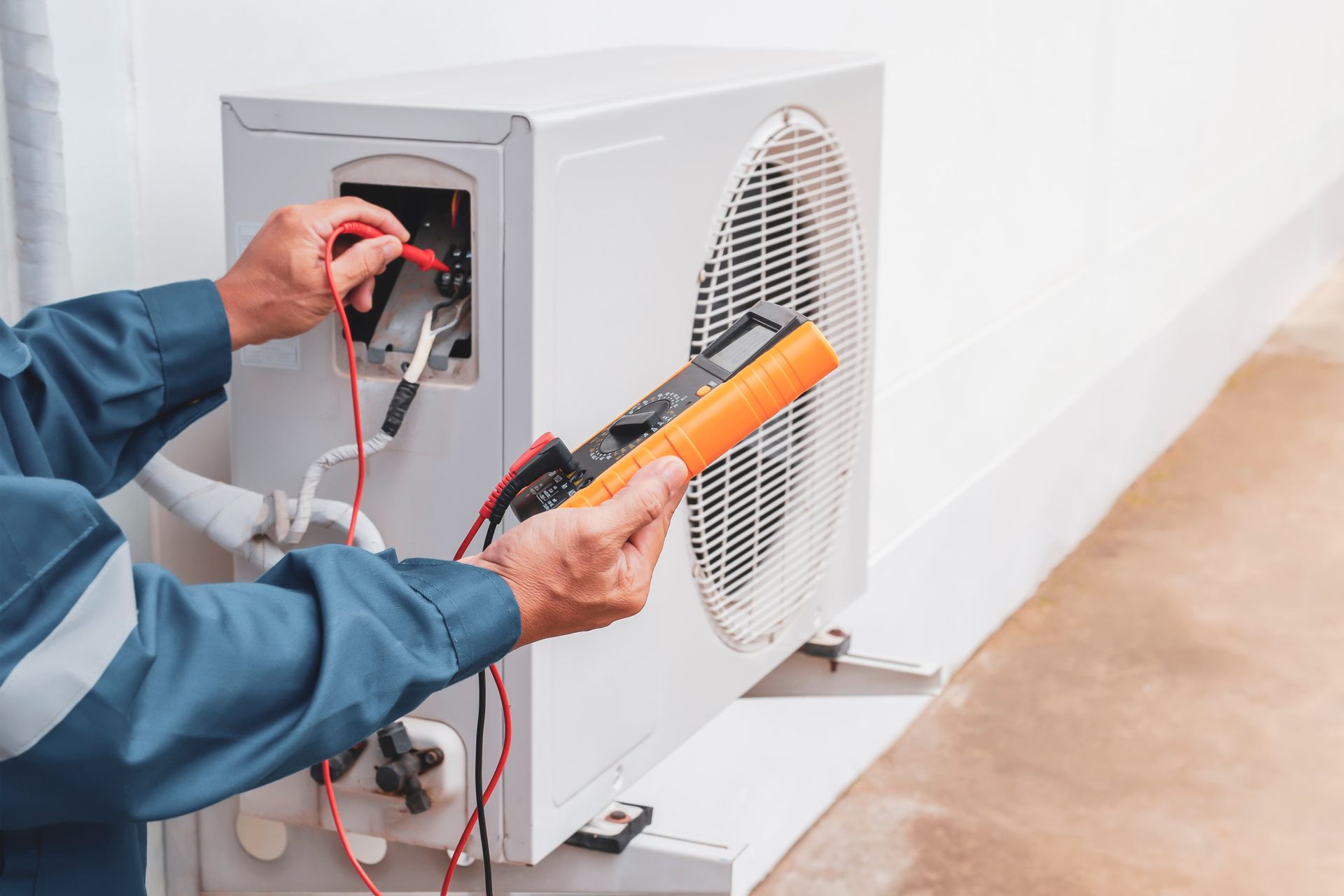
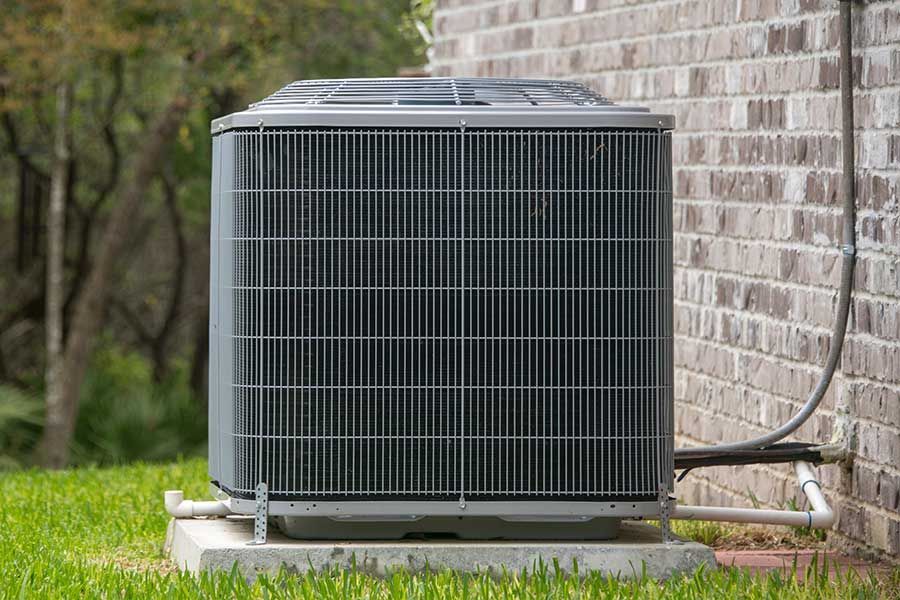
When we arrived and opened up the outdoor unit, the condenser coil fins were significantly corroded along the bottom two thirds of the coil face, the section most directly exposed to airflow coming off the ground where salt concentration is highest. The fins had lost enough structural integrity that cleaning alone was not going to restore meaningful performance. We also found the contactor contacts pitted and the capacitor reading low, both of which are consistent findings in a unit that has been dealing with moisture and salt intrusion in the electrical compartment over several seasons.
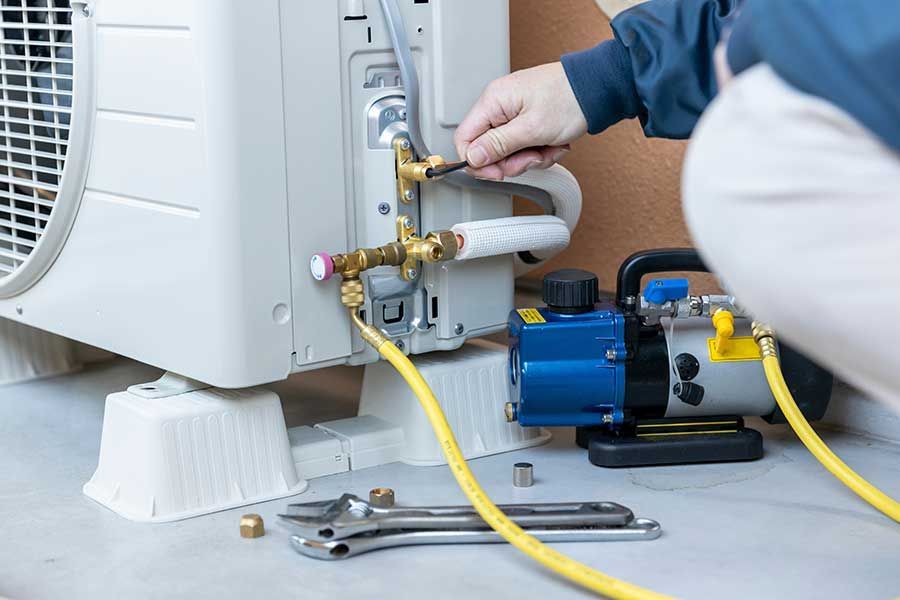
We replaced the condenser coil, the contactor, and the capacitor in a single visit, sealed the electrical compartment entry points that had been allowing moisture in, and checked the refrigerant charge and evaporator coil condition before we left. Charles mentioned that a previous service company had cleaned the coil and topped off the refrigerant the year before without ever noting the corrosion progression or explaining that the coil was approaching the end of its serviceable life. That kind of incomplete picture is exactly what we try to avoid by being thorough and direct about what we find.
The Level of Care Riomar Homes Deserve
Riomar is a neighborhood where the homes are well cared for and the people who own them expect the same from the companies they bring in. Bates Air and Heat is veteran-owned, and that background informs a very specific approach to this work. We do not cut corners because a job is complicated, and we do not withhold information because it might make for a harder conversation. Riomar homeowners deserve to know exactly where their system stands, and that is what we deliver on every call. Here is what working with us looks like in this neighborhood:
- A diagnostic process calibrated for coastal exposure, not just the standard checklist, so the full picture of corrosion-related wear gets surfaced rather than missed.
- Emergency availability for when a system failure cannot be scheduled around, because Riomar in summer without functional cooling is not a comfortable situation in any home.
- Honest guidance when corrosion has advanced far enough that a repair is buying time rather than solving the underlying problem, with straightforward options presented without pressure.
- Quality components and installation methods appropriate for salt air environments, because the right repair done with the wrong materials does not hold up in a place like this.
- Maintenance agreements structured for the pace of coastal wear, giving Riomar homeowners regular inspection intervals that match what the environment actually demands.
We have been grateful for every opportunity to work in a neighborhood that takes as much pride in its homes as Riomar does, and we intend to keep earning that trust one call at a time.