


Taking the Time for You.

West Vero Corridor is one of Indian River County’s most actively growing residential areas, a stretch of newer subdivisions and established neighborhoods running west of Vero Beach along the SR-60 corridor where development has accelerated significantly over the past two decades. The community draws a mix of young families, working households, and retirees into a range of housing built primarily between the 1990s and the present, with a concentration of stucco subdivision homes that went up quickly during Florida’s mid-2000s building surge. That growth pace left a legacy of HVAC installations that were completed to code minimums rather than optimized for the specific homes they were meant to serve.
Bates Air and Heat is a veteran-owned HVAC company serving West Vero Corridor and the surrounding Indian River County area. We bring honest assessments and repairs that hold up to every home we service along this corridor, whether your system was installed five years ago or fifteen. When your AC stops keeping pace with a West Vero summer, we are the right call.
West Vero Corridor’s inland position and newer housing stock create a specific set of stress conditions for residential cooling systems. These are the warning signs homeowners along this corridor most commonly report before a system reaches a critical failure point.
West Vero Corridor’s inland heat builds steadily through the summer without the coastal moderation that Vero Beach proper benefits from on its eastern side. A system showing these signs in June needs attention before August removes any margin for a scheduled repair.
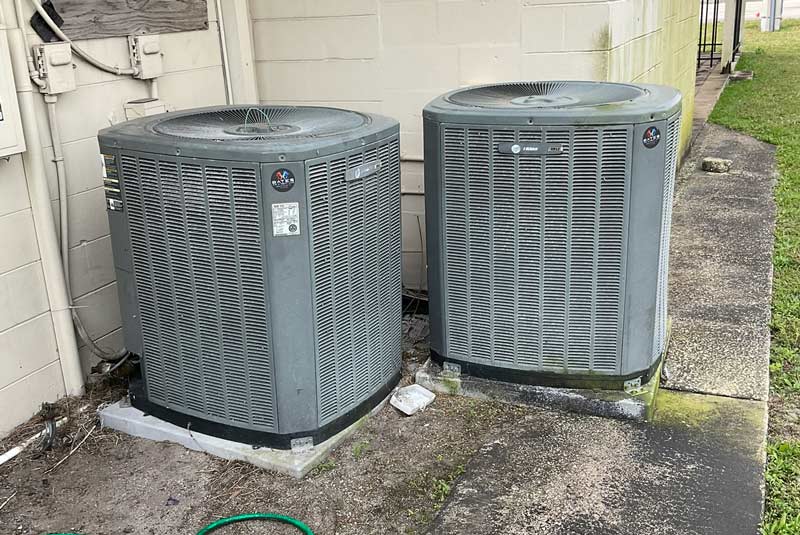
West Vero Corridor sits on the western edge of Indian River County’s developed residential band, where the land transitions from suburban neighborhoods into the open agricultural terrain that stretches toward the St. Johns River watershed. That western position means homes along this corridor are among the last to benefit from the moderating sea breezes that move inland from the coast during afternoon hours, and among the first to absorb the radiant heat that builds over open western terrain through the hottest parts of the day. The result is a heat load profile that runs consistently higher than comparable homes closer to the coast, and AC systems that are sized to county averages rather than the specific conditions of this corridor are already starting at a disadvantage.
The mid-2000s subdivision development that defines much of West Vero Corridor produced homes with open floor plans, vaulted ceilings in common areas, and larger square footages than the earlier residential stock in the county. These design choices, while appealing to buyers, create thermal stratification challenges that single-stage cooling systems were not engineered to address efficiently. Warm air stratifies at ceiling level in vaulted spaces, return air pathways in open-plan layouts frequently pull from insufficient locations, and the sheer volume of air these homes require to condition means the system runs longer cycles with higher runtime totals than a comparably sized traditional floor plan would produce.
West Vero Corridor also sits in a part of the county where afternoon convective thunderstorm activity is concentrated by the sea breeze front pushing inland from the coast. This corridor regularly sees the first intense storm cell formation of the afternoon as the marine air collides with the hotter inland air mass above the western residential areas. Those storms bring frequent lightning and the associated power surge activity that stresses HVAC electrical components across the corridor on a near-daily basis during the June through September storm season.
We received a call from Darnell on a Friday afternoon in late July. He lived in one of the larger subdivisions off 58th Avenue in West Vero Corridor and had been dealing with a house that cooled adequately in the morning hours but could not keep the second floor below eighty degrees by mid-afternoon regardless of what he set the thermostat to. The system was eight years old and had been serviced once since installation. He had assumed the problem was just the Florida heat being too much for a two-story home.
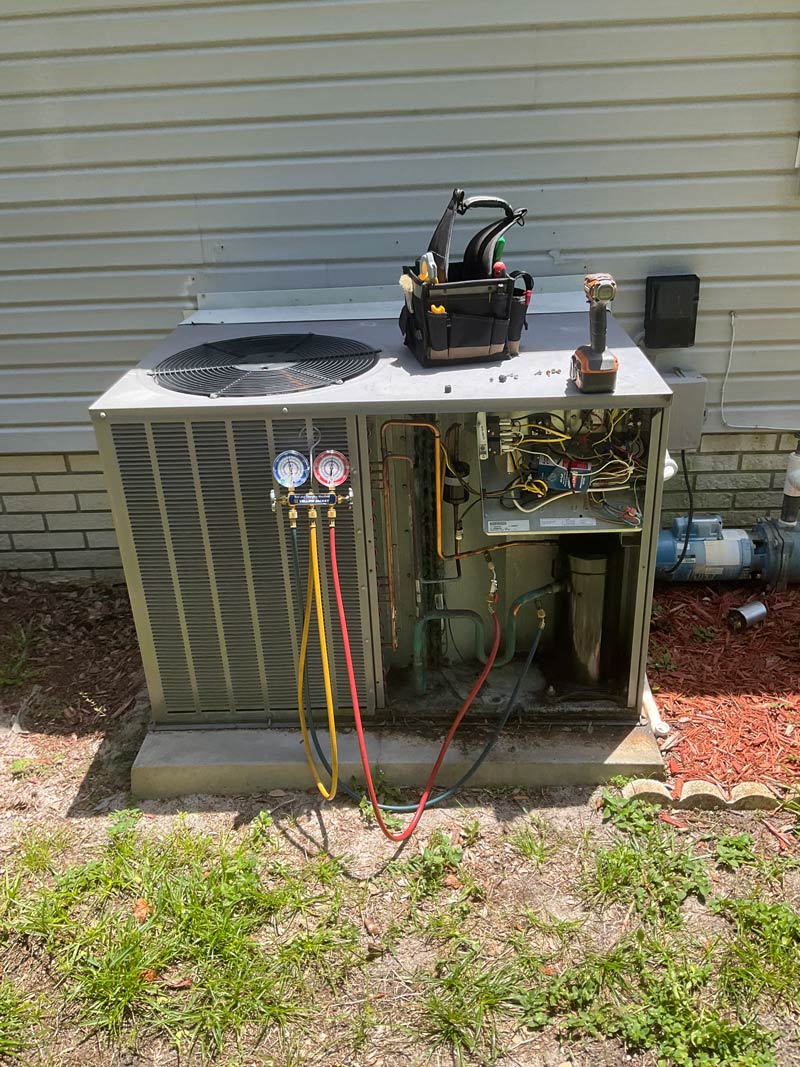
Our technician found the system was low on refrigerant due to a slow leak at an indoor coil connection, which had been reducing the system’s capacity gradually over the past one to two seasons. Below its rated charge, the system could manage the first-floor load adequately during morning hours but lost its ability to overcome the thermal stratification in the second-floor spaces once afternoon heat peaked and the home’s upper volume filled with accumulated warm air. The condenser coil also had a moderate debris accumulation from the open western terrain, reducing heat rejection efficiency and compounding the refrigerant shortfall.
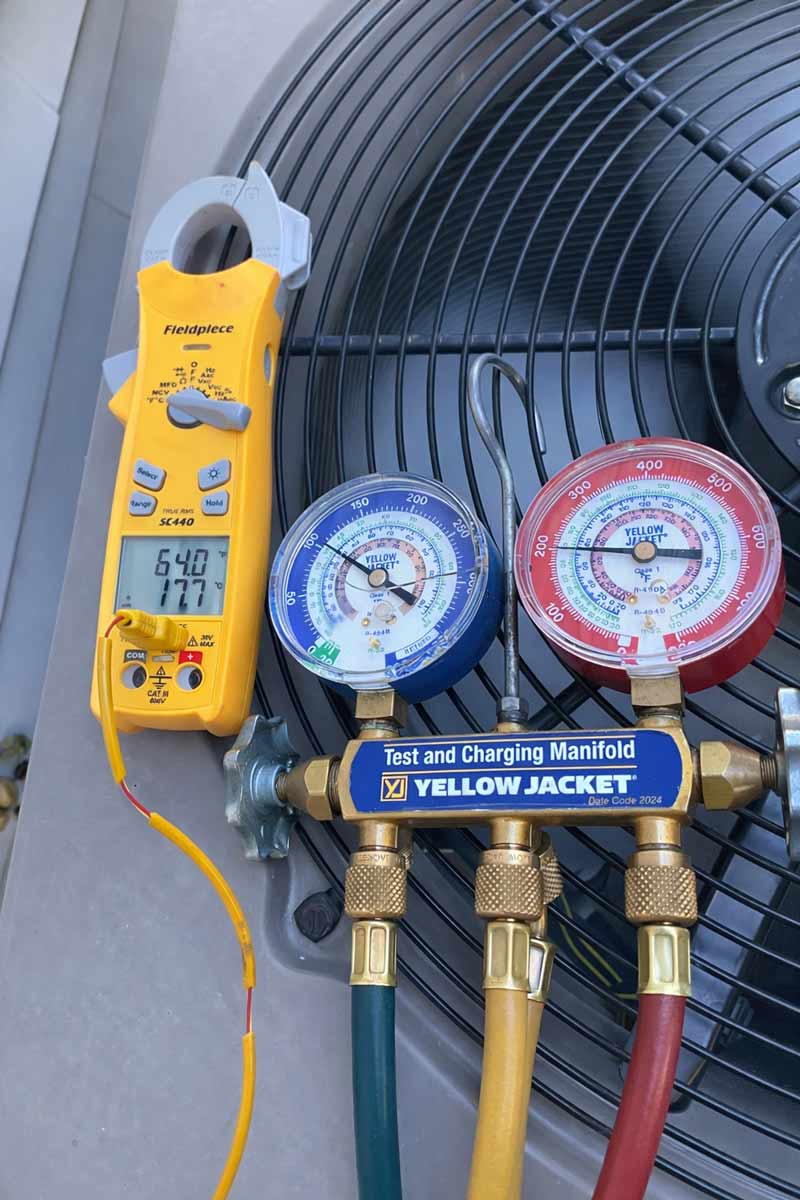
We located and sealed the coil connection leak, brought the system back to its correct refrigerant charge, cleaned the condenser coil, and verified the system’s electrical components before leaving. Darnell’s second floor was cooling normally by that evening for the first time in at least two summers. He mentioned he had not realized a slow refrigerant leak could behave that way, affecting one part of the house more than another based on time of day. In West Vero Corridor’s two-story homes with vaulted spaces, that thermal stratification pattern makes a partially charged system look like an undersized one, and the distinction matters for how the problem actually gets solved.
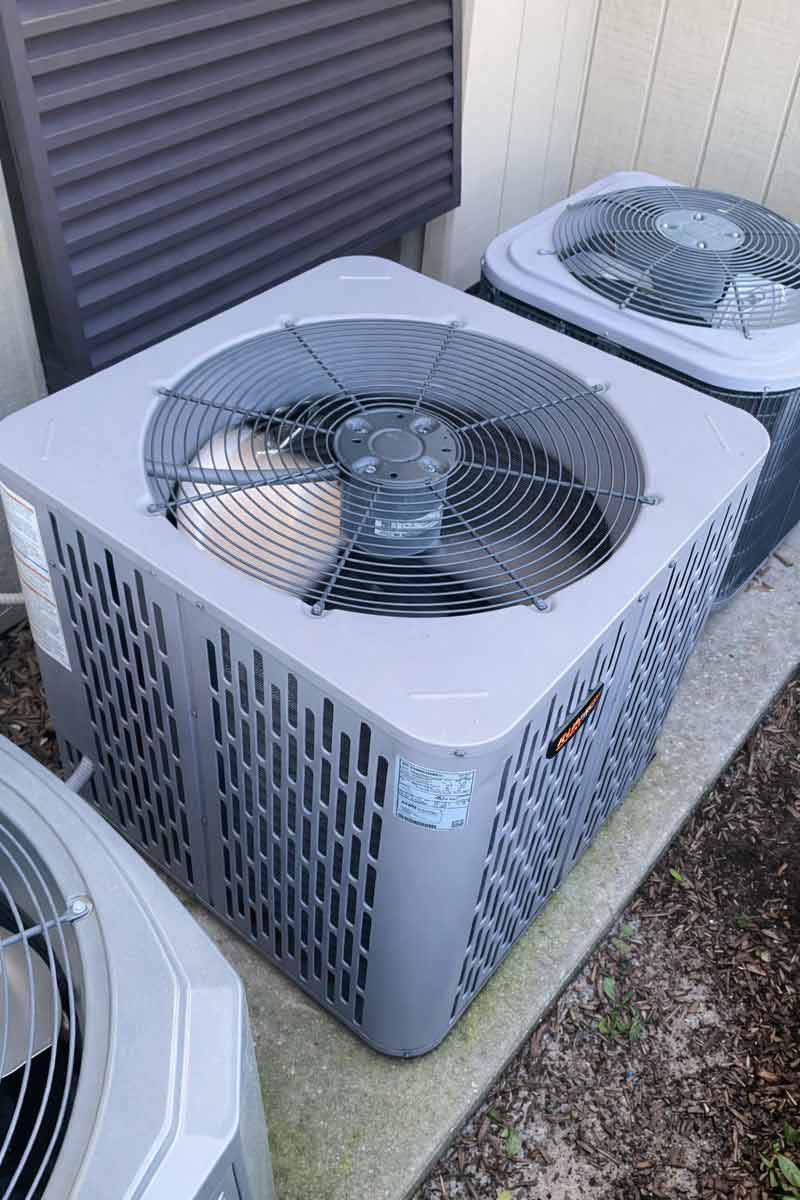
We understand what the western inland position and newer construction profile of West Vero Corridor actually demand from a cooling system, and we bring that understanding to every job we run here. As a veteran-owned company, honest diagnosis and repairs built to last are not optional. They are the standard. Here is what you can expect when you call us.
Here are direct answers to the questions West Vero Corridor homeowners ask us most about their air conditioning systems.


This time-of-day pattern is one of the clearest signs that a system is operating below its rated capacity. In West Vero Corridor’s inland position, afternoon heat loads are higher than coastal areas, and a system dealing with low refrigerant, a dirty coil, or an undersized return air pathway can manage morning conditions but hits its limit once afternoon heat peaks. Two-story homes with vaulted ceilings compound the issue through thermal stratification that concentrates warm air at the upper level. A diagnostic visit will identify which factor is driving the pattern.
It does, and it is one of the most common complaints we hear from homeowners in West Vero Corridor’s mid-2000s subdivisions. Vaulted spaces allow warm air to stratify at ceiling level where the supply air cannot reach it effectively, and open-plan layouts often have return air configurations that pull from insufficient locations to overcome that stratification. If your system has always seemed to struggle with the upper volume of your home, the issue may be design-related rather than mechanical, and there are practical solutions worth discussing.
The western inland position of this corridor puts it in the zone where the sea breeze front pushing in from the coast collides with the hotter air mass above the western residential areas, which is where the first intense afternoon storm cells typically form during summer. That means West Vero Corridor sees frequent nearby lightning on a near-daily basis during the June through September storm season. Repeated surge exposure from those events gradually degrades capacitors, control boards, and compressor windings in ways that produce cumulative failure rather than immediate damage.
Thermal stratification is the tendency of warm air to rise and accumulate at ceiling level while cooler air stays near the floor. In homes with vaulted ceilings or open two-story layouts, this effect is pronounced enough that the upper volume of the home can be ten or more degrees warmer than the living area near floor level. A single-stage cooling system cycling on and off based on a thermostat reading at one location in the home may satisfy the sensor while leaving the upper spaces uncomfortably warm. Addressing stratification often involves a combination of proper refrigerant charge, airflow balancing, and in some cases zoning or equipment adjustments.
It is a pattern we see regularly in West Vero Corridor and similar communities built during that period. The pace of construction during the mid-2000s surge meant HVAC installations were often completed to minimum code requirements rather than optimized for the specific home. Systems were sized to square footage averages without detailed load calculations, duct systems were routed for installation convenience rather than airflow efficiency, and equipment was selected for upfront cost rather than long-term performance. After fifteen or more years of Florida operating conditions, those shortcuts show up as comfort and efficiency problems that are worth diagnosing and in many cases correcting without full system replacement.