


Taking the Time for You.

Sebastian sits at the northern edge of Indian River County where the county line meets Brevard, and the community reflects that boundary position in its character. It is a place where longtime Florida residents, retirees, and working families share a riverfront town that has grown steadily without losing its unhurried pace. Homes here range from modest fishing community bungalows near the Sebastian Inlet corridor to newer subdivisions that have filled in the surrounding residential areas over the past two decades, and that range means HVAC situations in Sebastian vary considerably from one neighborhood to the next.
Bates Air and Heat is a veteran-owned HVAC company serving Sebastian and the broader Indian River County area. We bring the same honest, accountable service to every home in this community regardless of how old the system is or how far the property sits from the main road. If your AC is not keeping up, we are ready to take a look and give you a straight answer about what it needs.
Sebastian’s proximity to the Sebastian Inlet and the Indian River means ambient moisture levels stay elevated through most of the year, putting consistent pressure on residential cooling systems. These are the warning signs most worth acting on before a repair becomes a replacement.
Sebastian summers are long and the inlet keeps the air heavy well into the evening. A system showing two or more of these signs is one worth having diagnosed before the peak of the season removes any flexibility in scheduling.

Sebastian’s position at the northern tip of Indian River County places it where the Indian River Lagoon narrows toward the Sebastian Inlet, one of the few natural ocean inlets remaining along this stretch of Florida’s east coast. That inlet connection means Sebastian experiences tidal air movement that pushes genuinely salt-laden moisture inland on a daily cycle, affecting properties well beyond the immediate waterfront. Homes within a mile or two of the inlet corridor see condenser coil degradation timelines that are closer to barrier island conditions than to the inland communities just a few miles south, yet many homeowners in these areas are not aware their location warrants the same level of coastal maintenance attention.
The community’s residential growth pattern has layered newer subdivision development over an older fishing village core, and those two housing generations have very different HVAC profiles. The older bungalow-style homes near the river and inlet were built for natural airflow rather than mechanical cooling, with floor plans and window placements that admit outdoor humidity as readily as they admit breezes. Fitting modern central air conditioning into these structures often required creative duct routing through tight spaces, and those non-standard installations are now a generation old and developing the kinds of leaks and disconnections that come from aging materials in a humid environment.
Sebastian also sits at an elevation and drainage profile that results in standing water around residential properties after the heavy rain events common to this part of Brevard and Indian River County from June through September. Condenser units installed at ground level on properties with poor drainage spend extended periods surrounded by saturated soil, which corrodes cabinet bases, promotes rust on mounting hardware, and keeps the air immediately around the unit more moisture-laden than manufacturer specifications assume. That ground-level moisture exposure compounds the salt air issue for properties near the inlet in ways that show up as accelerated component failure well before the equipment’s rated lifespan.
We received a call from Vincent on a Wednesday morning in late July. He lived in a neighborhood off Barber Street in Sebastian, in a home built in the late 1980s that had seen a couple of system upgrades over the years but had been running the current unit for about nine years. He described the problem as a system that seemed to work fine for the first half of the day but started losing the battle against the heat by early afternoon, leaving the back bedrooms uncomfortable through the evening.
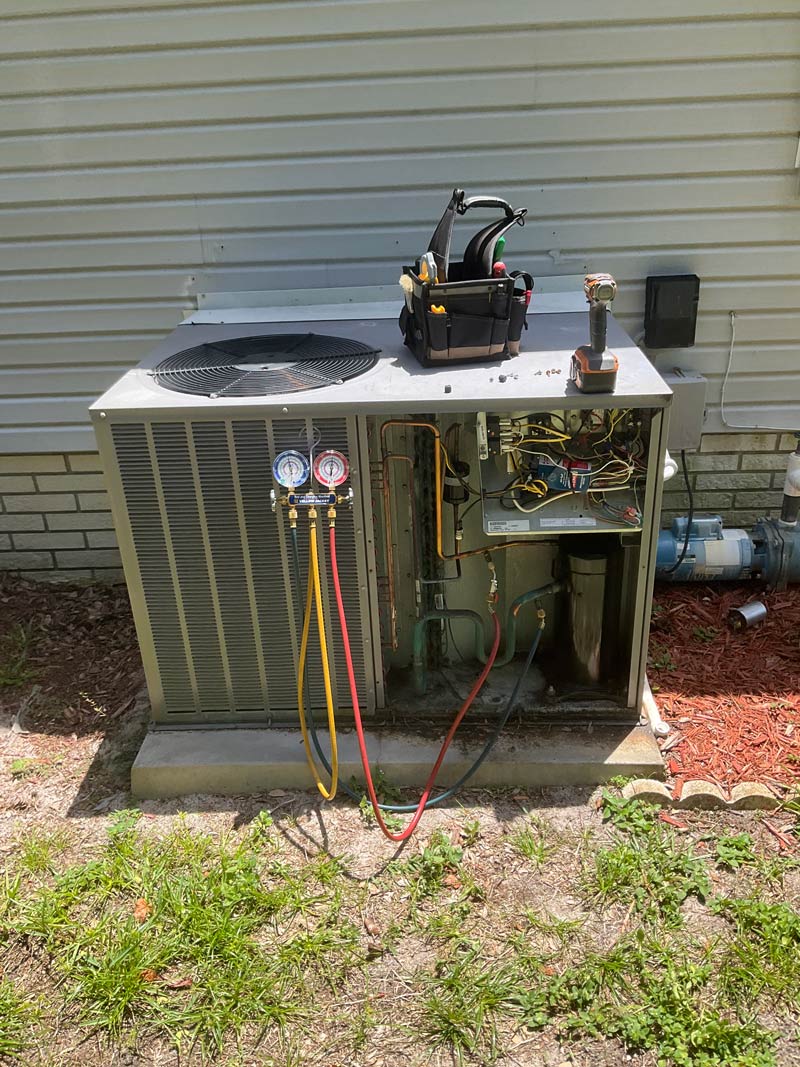
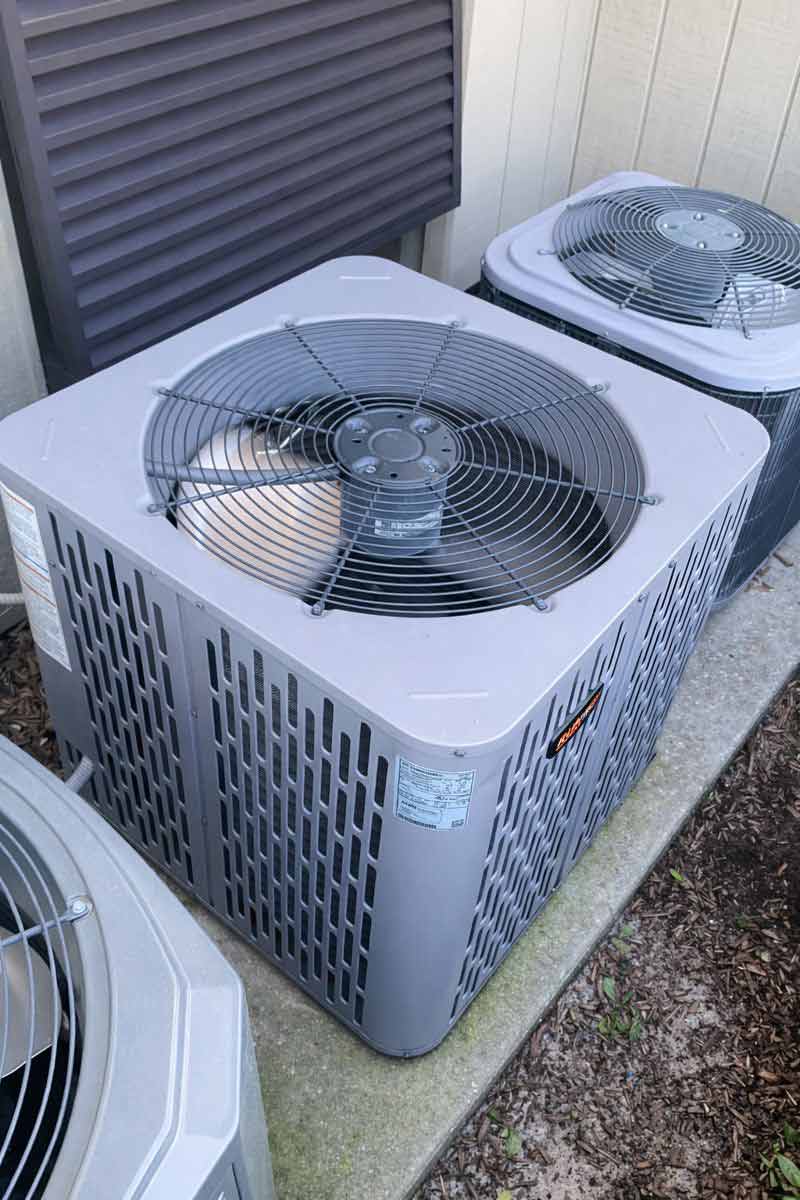
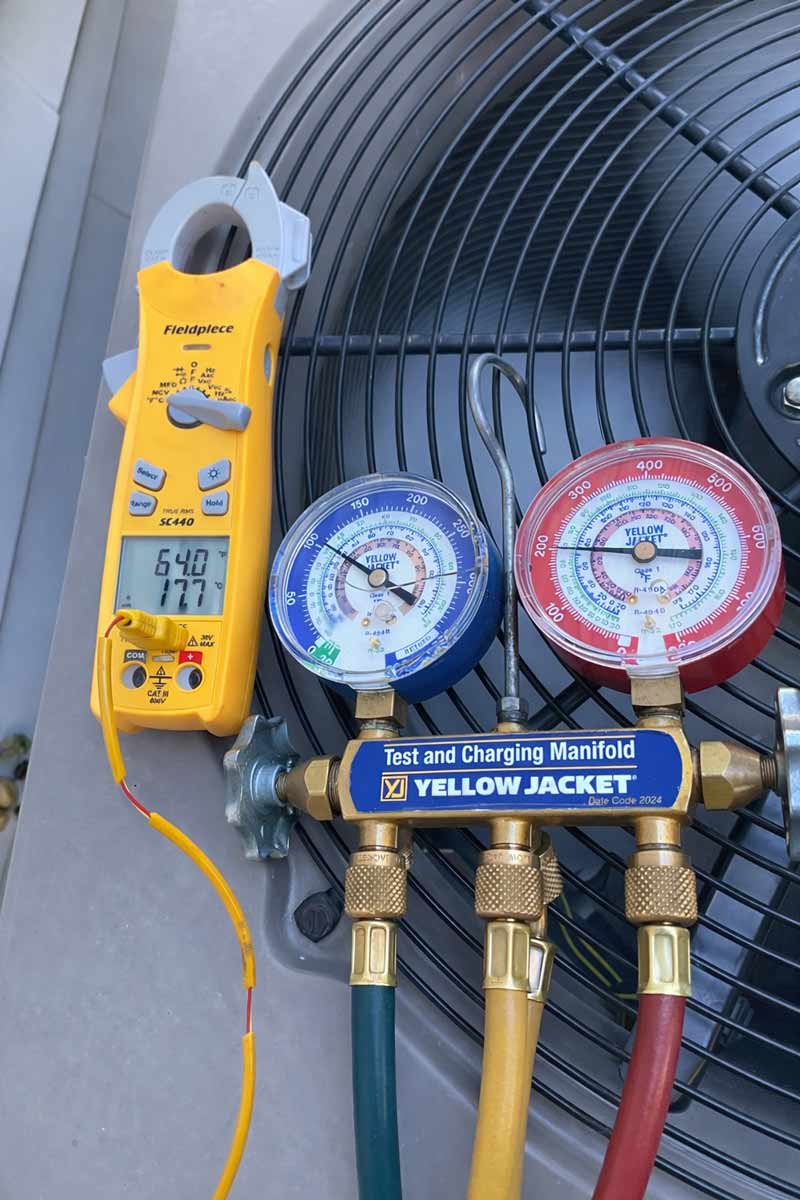
Our technician found the condenser coil moderately corroded with salt deposits consistent with inlet-area exposure, restricting airflow enough to push the system toward high-pressure conditions under peak afternoon load. The more significant finding was in the attic. A flex duct run serving the two back bedrooms had developed a partial collapse at a connection point where the duct had been extended during a previous renovation, reducing the supply airflow to those rooms to roughly half of what the registers were sized to receive. The front of the house was pulling all the conditioning it needed. The back half was not getting its share.
We cleaned the condenser coil, applied a corrosion inhibitor to slow further degradation, and reseated and secured the collapsed flex duct connection in the attic. Vincent’s back bedrooms were cooling normally by that evening. He mentioned he had assumed the problem was just how older homes in Sebastian handled Florida heat in summer. It was not the age of the home. It was a coil losing ground to inlet air and a duct that had quietly failed at a joint no one had looked at since the renovation. Both were entirely fixable, and neither required replacing the system.
We serve Sebastian because the homeowners here deserve the same quality of attention as any community in Indian River County. As a veteran-owned company, we show up prepared, diagnose honestly, and stand behind the work we do. Here is what you can count on when you call us.
Here are straightforward answers to the questions Sebastian homeowners ask us most often about their air conditioning systems.

More than most homeowners in the area realize. The inlet’s tidal air movement pushes salt-laden moisture inland on a daily cycle, and properties within a mile or two of the inlet corridor see condenser coil corrosion timelines much closer to barrier island conditions than to inland communities. If your home is in that range, the same maintenance attention given to oceanfront properties applies to you.
Uneven cooling between the front and back of a home almost always points to a duct issue on the runs serving the affected rooms. In Sebastian’s older homes where duct systems have been modified or extended over the years, flex duct connections that have partially collapsed, separated, or were never properly secured are a frequent cause. A technician who inspects the attic ductwork will typically find the problem quickly.
Sebastian’s drainage profile and flat terrain mean condenser units on lower-lying properties spend extended periods surrounded by saturated soil after heavy summer rain events. That sustained ground moisture accelerates corrosion on cabinet bases and mounting hardware from the bottom up and keeps the immediate air around the unit more humid than normal operating conditions assume. Ensuring your condenser pad is elevated and the surrounding grade directs water away from the unit reduces that exposure significantly.
At nine to ten years, a well-maintained system in a standard environment still has reasonable service life remaining. In Sebastian’s inlet-adjacent conditions, where salt air and ground moisture accelerate component wear, that calculus shifts somewhat. The right answer depends on the specific repair needed, the overall condition of the equipment, and how efficiently it has been running. We will always give you an honest comparison rather than defaulting to a recommendation that benefits us over you.
The clearest visible signs are discoloration or pitting on the condenser coil fins, rust staining on the lower cabinet panels, and oxidation on electrical terminal connections inside the unit. Less visible signs include a system that has been gradually losing efficiency over one or two seasons without an obvious mechanical cause, and startup hesitation that comes and goes depending on temperature and humidity conditions. An annual inspection that includes opening the condensing unit and checking both the coil and electrical components directly is the best way to catch corrosion damage before it causes a failure.