


Taking the Time for You.

Oslo sits quietly along the southern edge of Indian River County, sandwiched between the Indian River Lagoon to the east and open agricultural land to the west. It is a community of modest, well-kept homes where people have generally been around long enough to know their neighbors and their property. It is also a place where the lagoon’s persistent moisture hangs in the air year-round, and summers bring the kind of unrelenting heat that puts real demands on a home’s cooling system. Bates Air and Heat is a veteran-owned HVAC company that takes calls in Oslo seriously, shows up prepared, and does not leave until the job is done correctly.
Oslo homeowners tend to be practical people who notice when something around the house is not performing the way it should. Heat pumps usually give fair warning before they fail outright, but those warnings can be subtle enough to brush off during a busy week. The ones worth acting on include:
Oslo’s proximity to the lagoon means ambient moisture levels stay high even on days that feel relatively mild. A heat pump that is beginning to lose ground in that kind of environment will keep falling behind until the underlying issue is addressed.
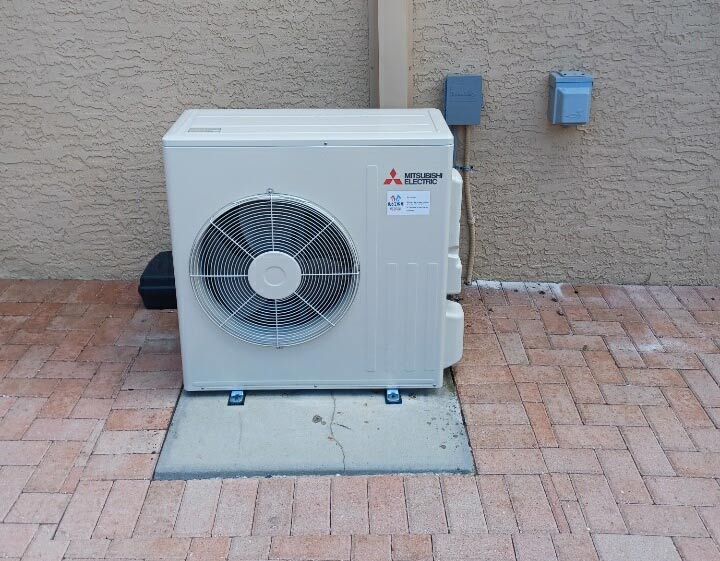

Oslo’s position along the Indian River Lagoon gives it a microclimate that differs meaningfully from communities just a few miles inland. The lagoon acts as a humidity reservoir, releasing moisture into the surrounding air continuously and keeping dew points elevated even during drier stretches of the year. For a heat pump, that means the system is almost always working against high latent heat loads, pulling water vapor out of indoor air in addition to managing temperature. That sustained dehumidification demand accelerates wear on components in ways that are specific to lagoon-adjacent communities. Homes in Oslo also skew older, with much of the residential construction dating to the 1970s and 1980s, and those houses carry the accumulated effects of decades of lagoon-corridor humidity on their mechanical systems. The repair patterns we see most consistently here reflect both of those realities:
These are not random failures. They are predictable outcomes of a specific environment, and recognizing them as such is what allows us to repair them in a way that lasts.
We approach a service call in Oslo knowing that the lagoon environment is an active participant in whatever problem brought us there. That means our diagnostic process accounts for moisture-driven failure modes that would not even be on the checklist for a system fifty miles inland. We work through the full picture before we recommend anything, and we explain what we find in plain terms before we start. Our heat pump repair services include:
For Oslo homeowners with older systems operating in this kind of environment, our maintenance agreements make a real difference. Getting the system assessed on a regular schedule is the most reliable way to stay ahead of the moisture-driven wear that is always quietly working on the equipment.


We took a call last summer from a woman named Diane who lives on a quiet street in Oslo not far from the lagoon. She had noticed over the course of about three weeks that her home felt sticky and uncomfortable even when the thermostat read at her normal set point. The temperature seemed fine on paper, but the air felt heavy and damp in a way that made the house genuinely unpleasant to be in. When we arrived and pulled the air handler open, the evaporator coil had a significant layer of biological growth across its surface. The coil was still technically functioning, but the fouling had reduced its capacity to remove moisture from the air to the point where the system could hit the target temperature without actually dehumidifying properly. That is a condition that shows up in numbers as normal operation but feels miserable to live in. We cleaned the coil thoroughly, treated the drain system, and found that the drain pan in her older air handler had developed a hairline seep along one edge that had been wicking moisture into the cabinet base for an unknown length of time. Diane said she had mentioned the sticky feeling to a technician who had come out the previous year and been told the system was running fine. Technically it was. But running fine and performing correctly are not always the same thing, and in a lagoon-adjacent community like Oslo, that distinction matters.
Oslo does not get the attention that larger nearby communities do, but the people who live here take their homes just as seriously and deserve service that reflects that. Bates Air and Heat is veteran-owned, and we bring the same preparation and accountability to a call in Oslo that we would bring anywhere else in Indian River County. We understand what this environment does to HVAC equipment, and that understanding shapes how we work. Here is what you can count on when you call us:
Oslo is the kind of community that deserves a company it can rely on, and building that kind of reliability one call at a time is exactly what we are here to do.


This is a common experience in lagoon-adjacent communities like Oslo. A heat pump handles both temperature and humidity, and when the evaporator coil is fouled or the system is low on refrigerant, it can hit the target temperature without removing enough moisture from the air. The result is a home that reads correctly on the thermostat but feels sticky and uncomfortable. A coil cleaning and full system check usually identifies what is driving it.
The lagoon keeps ambient humidity levels elevated year-round in surrounding communities, which means your system is continuously processing higher moisture loads than a system in a drier inland location. Over time, that sustained demand accelerates coil fouling, drain system stress, and corrosion on electrical components. It is one of the reasons regular maintenance matters more in Oslo than it might in other parts of the state.
The foam insulation on refrigerant lines breaks down over time from UV exposure, moisture contact, and physical wear. When it deteriorates, the cold copper lines sweat against surrounding materials, which can cause moisture damage to wall cavities and attic framing. It also reduces system efficiency because the refrigerant is absorbing heat it should not be picking up before it reaches the evaporator coil. Replacing damaged insulation is a straightforward repair that protects both the system and the structure.
A rusting drain pan is worth addressing before it becomes an active leak. Once the coating breaks down enough to allow seepage, moisture can wick into the air handler cabinet and the surrounding structure without producing an obvious overflow. In older Oslo homes where the original pan has been in place for decades, replacement is often a practical step to take during a service visit rather than waiting for it to become an emergency.
It is probably the best fit for exactly that situation. Older systems in high-humidity, lagoon-adjacent environments accumulate wear faster than equipment in more forgiving conditions. A scheduled maintenance visit catches the kind of gradual deterioration that is easy to miss between calls and keeps the system running longer than it would with only reactive service.