


Taking the Time for You.

Whether you live in a single-family home or a second-floor condo, a new air conditioner should fit your space, your budget, and the way you use your home. At Bates Air and Heat, we look at all three before recommending anything. That means measuring the home, checking where the equipment will go, and talking through what you want from the new system.
We install central air systems, split systems, package units, and ductless options, along with the refrigerant lines, drain connections, and thermostats that tie them together. Our veteran-owned team gives you honest options and an upfront quote, then handles removal, installation, and full testing so the job is done right the first time. We keep you informed from the first visit to the final walkthrough. If you have questions later, you’ll have a local team that picks up the phone.
The easiest place to notice a failing air conditioner is your own living room. Many homes and condos around Nevins date back to the 1970s and 1980s, and systems in properties that age have often been replaced once and are wearing out again. These are the signs we hear about most often:
If any of these sound familiar, it’s worth having the system looked at before peak summer. We’ll let you know honestly whether a repair will do or whether replacement makes more sense.
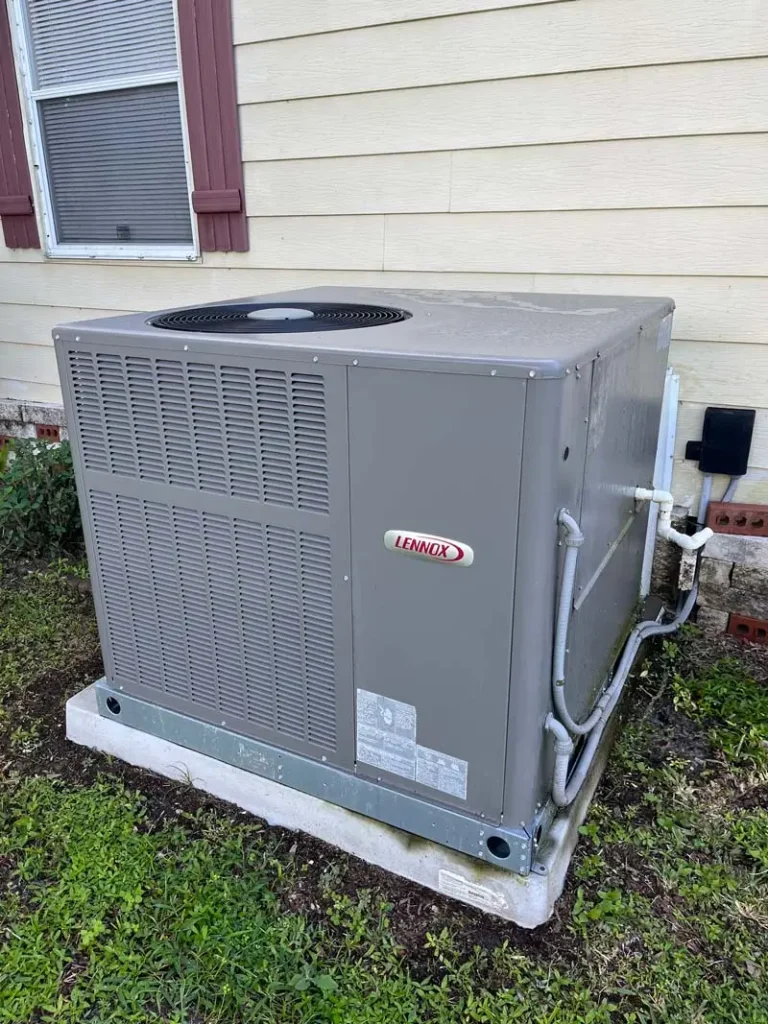
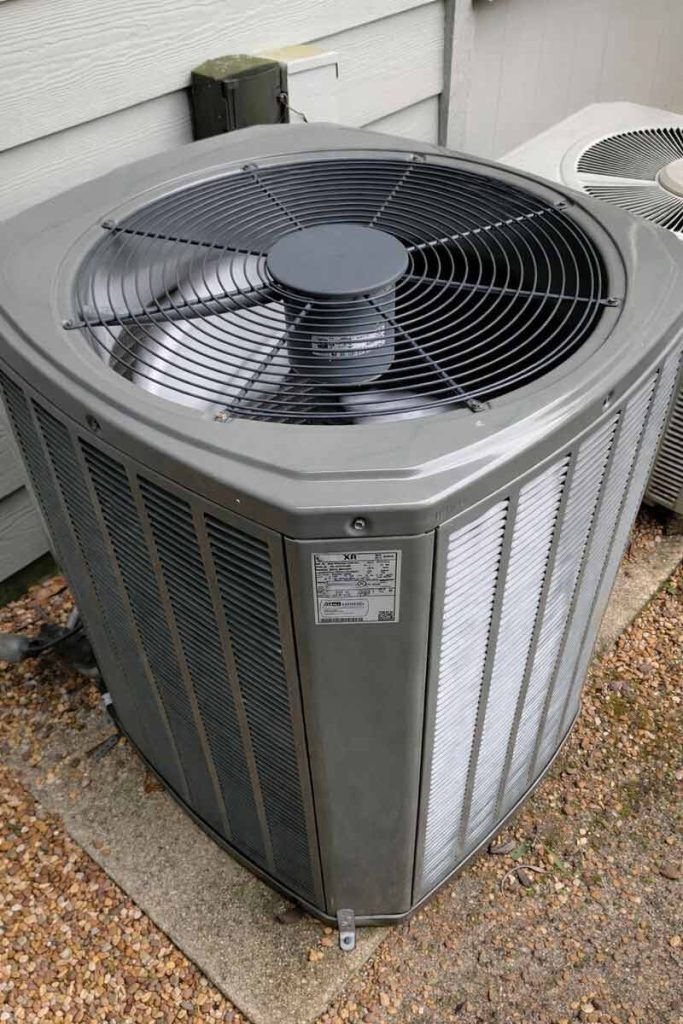
In close quarters, a bad installation doesn’t just affect you. A poorly secured condenser can rattle beneath a neighbor’s window, and a drain line that isn’t sloped or protected can send water through the ceiling of the unit below. Careful installation keeps your system quiet, keeps water where it belongs, and keeps you on good terms with the people next door.
It also decides how well the system handles the moisture in the air. With the Indian River Lagoon close by, humidity stays high for much of the year, and an AC that’s oversized or undercharged will leave rooms cool but damp. A properly sized and charged system removes that moisture steadily, which keeps the air fresher and helps prevent mildew in closets and on walls.
Over time, those details add up to real savings. A system that’s installed correctly runs closer to its rated efficiency, needs fewer repairs, and keeps its warranty in good standing. That’s a better return than any equipment upgrade can deliver on its own.
Most installs we do are wrapped up in a single day, but the work starts well before that. During the first visit, we measure the living space, check the air handler location, inspect ductwork and drain routing, and confirm the electrical connections are in good shape. We use that information to run a load calculation and recommend a system that fits.
Once you approve the plan and any needed association paperwork is in place, we schedule your installation. Our crew protects your floors, removes the old equipment, and installs the new air handler and outdoor unit. We connect the refrigerant lines, install a properly sloped drain with a float safety switch, and anchor the outdoor unit to a level pad.
Before we leave, we evacuate and charge the system, test airflow, check temperatures at the vents, and set up your thermostat. We show you how to change your filter and what to watch for going forward. A maintenance plan is available if you’d like us to keep an eye on the system each year.
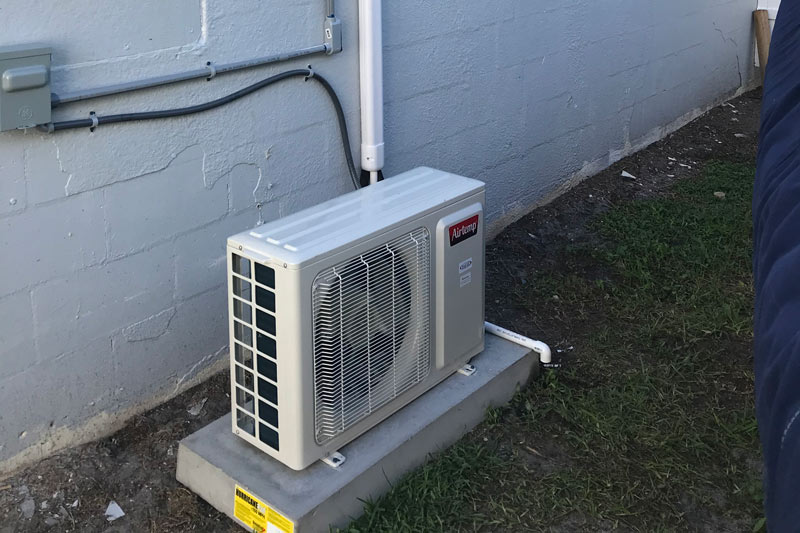
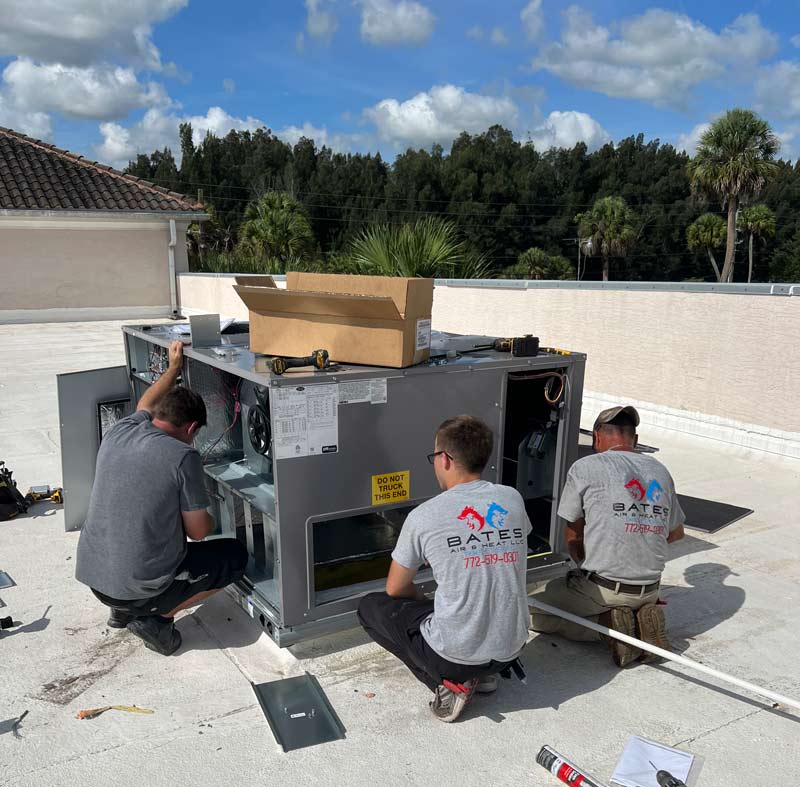
A big share of housing around Nevins is made up of garden-style condos and villas built in the 1970s and 1980s, including nearby communities like Vista Royale, Vista Gardens, Pine Arbor, and Grove Isle. Many of these units run 550 to 750 square feet, with an air handler tucked into a small closet and a condenser sitting on a pad below. When it’s time to replace the system, those tight layouts create problems a standard house install doesn’t.
Newer air handlers are often larger than the units they replace, so a closet built decades ago may need modifications to fit the new equipment with proper service clearance. Upper-floor units usually rely on long refrigerant line sets running down to the ground, and older lines may be the wrong size or too worn to reuse. Drain lines are another concern, since a clog or overflow in a stacked unit can leak straight into the condo below. Many associations also have rules about equipment placement, work hours, and contractor access.
Before we replace a condo system, we measure the closet, inspect the line set and drain path, and check what the association requires. We recommend equipment that fits the space and the unit’s actual cooling load, which often means a smaller system than people expect. During the install, we replace or flush the line set as needed, add a float safety switch to the drain, and test everything so your new system runs quietly and keeps both you and your neighbors dry.
We know you’re trusting us with your home, and we don’t take that lightly. Here’s what you can expect from our veteran-owned team:
Ready to replace a tired system? Call Bates Air and Heat today to schedule your AC installation estimate.
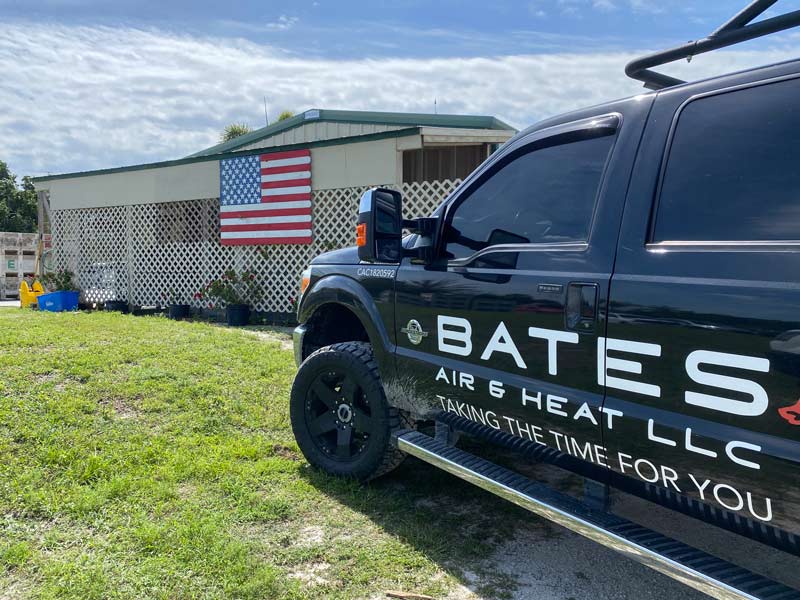

Yes. We handle line set runs, tight closets, and drain connections for upper-floor units and work within your association’s rules.
Usually, but newer equipment can be larger than older models. We measure the closet first and recommend options that fit with proper service clearance.
Sometimes. If the lines are the right size, in good condition, and can be flushed properly, they may be reused. Otherwise we install new ones.
Many condo associations require notice or approval for equipment changes. Check with your association, and we’ll work within its requirements.
Keep the drain line clear, change filters regularly, and make sure a float safety switch is installed. Routine maintenance helps catch drain problems early.
We use cookies to improve your experience on our site. By using our site, you consent to cookies.
Manage your cookie preferences below:
Essential cookies enable basic functions and are necessary for the proper function of the website.
You can find more information in our Cookie Policy and .