


Taking the Time for You.

Getting an air conditioner repaired should not feel like a gamble. Bates Air and Heat gives homeowners a clear diagnosis, honest recommendations, and repairs done right the first time. Our technicians handle the full range of cooling problems, including systems that will not start, units that blow warm air, refrigerant leaks, and electrical failures. We take the time to find the real cause so you are not calling us back a week later.
Being veteran-owned means we value accountability and doing what we say. You will always know what we found, what it will take to fix, and what it costs before the work begins. When a breakdown hits outside normal hours, our emergency service is ready to help.
Many homes in Gifford are compact, single-story houses where the air handler sits in a hall closet, a utility room, or a small attic space. Those tight quarters can trap heat around the equipment and make service access tricky, but our technicians are used to working in close spaces without making a mess of your home. We repair central air systems, heat pumps, and air handlers of every age, from mid-century homes to houses built in the last few years.
Our repairs cover failed capacitors and contactors, worn blower and condenser fan motors, refrigerant leaks, clogged drain lines, frozen coils, faulty thermostats, and damaged wiring. We also check airflow and system sizing, since an air conditioner that does not match the home can wear itself out long before it should. Whether you live in the home or manage it as a rental, we give you a straightforward plan and an upfront quote before anything gets fixed.
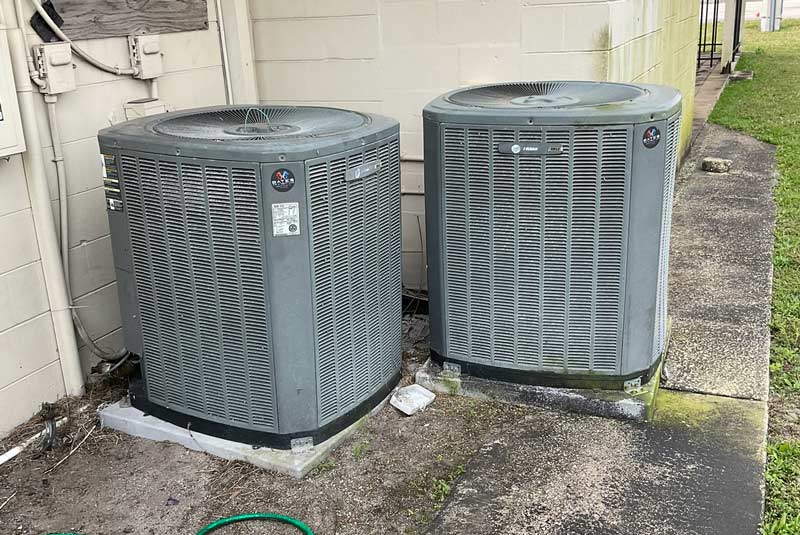

Small changes in how your system sounds, smells, or feels are often the first clue that a repair is needed. Watch for these signs around the house.
Scheduling a repair as soon as you spot these signs helps protect the rest of your system and keeps your home comfortable.
A lot of the breakdowns we see trace back to parts that simply wore out. Many Gifford homes were built in the 1970s, 1980s, and 1990s, and systems in older houses have often been patched over the years with quick fixes that never addressed the real problem. Capacitors weaken, contactors pit, and motor bearings dry out, especially when equipment runs hard through a long Florida summer.
Pests are another surprisingly common cause. Ants are drawn to the electrical current inside outdoor units and can pack into contactors until the system stops responding. Lizards and rodents can chew wiring or nest near the condenser, creating shorts and blocked airflow.
Then there is the everyday buildup. Filters clog, condenser coils collect yard debris and dust, and drain lines fill with algae in the humid air. Each of these forces the system to strain harder until something gives out.
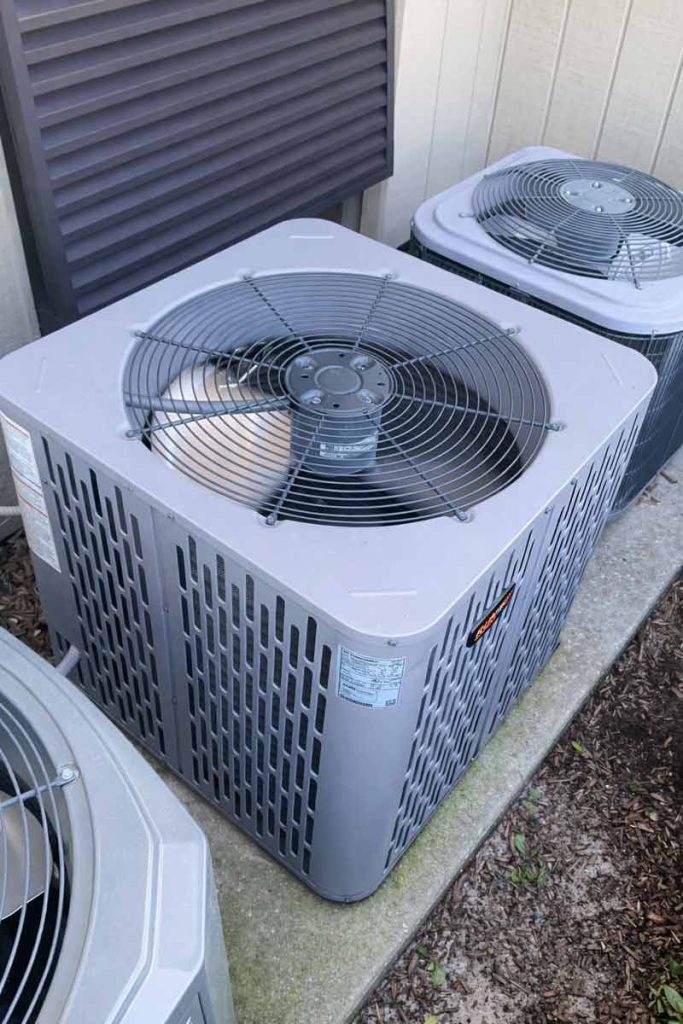
Short cycling happens when an air conditioner turns on, runs for just a few minutes, and shuts off again over and over. It is one of the most common complaints we hear from Gifford homeowners, and the size of the local housing stock has a lot to do with it. Many homes here are small, often under 1,300 square feet, and some cottages come in under 700 square feet. When a replacement unit is chosen by guesswork instead of a proper load calculation, it is easy to end up with a system that is too big for the space.
An oversized unit cools the air so fast that it shuts off before it has time to pull humidity out, leaving rooms cold but sticky. The constant starting and stopping also puts extra stress on the compressor and electrical parts. We see this often in older, compact neighborhoods like Gifford School Park and Hargrove, as well as in Spruce Park and Lincoln Park Estates, where systems have been swapped out more than once over the years. Low refrigerant, a dirty filter, or a thermostat placed near a supply vent can cause the same symptoms, which is why a careful diagnosis matters.
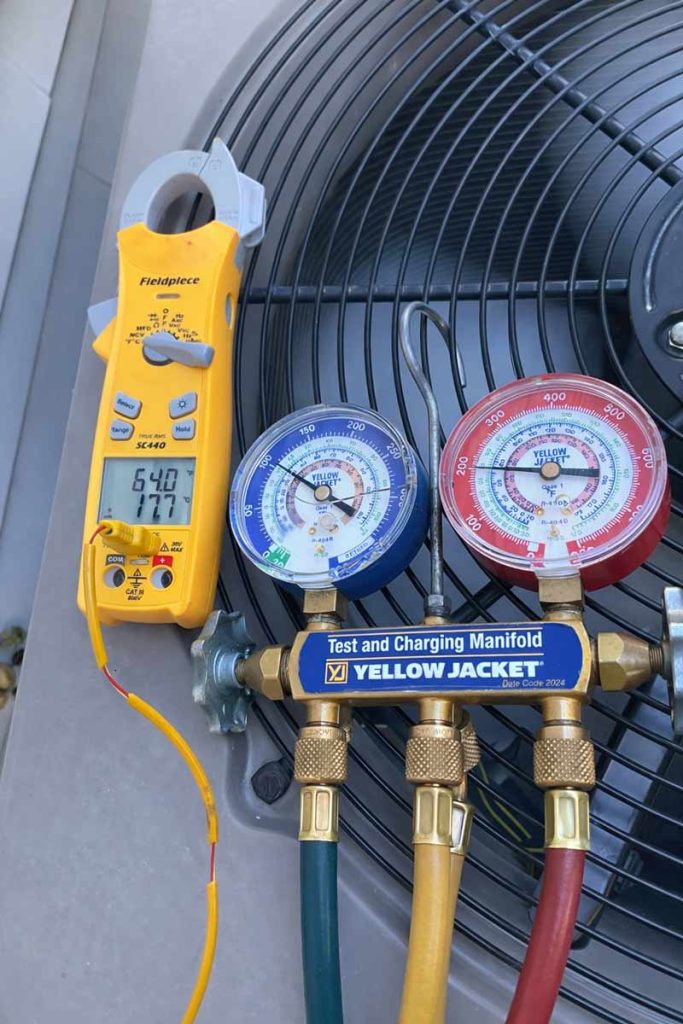
To get to the bottom of it, we start by watching a full cycle and checking the thermostat location and settings. We then measure refrigerant pressures, inspect the evaporator coil for ice, test the capacitor and contactor, and check airflow through the filter and ductwork. If the equipment itself is the wrong size, we explain your options honestly, whether that means adjusting fan settings to improve moisture removal for now or planning for a properly sized system down the road.
Gifford homeowners trust us because we treat every job as if our own home were on the line.
When your AC starts acting up, call Bates Air and Heat and get a straight answer from a team that cares.


Short cycling is often caused by an oversized unit, low refrigerant, a dirty filter, or a thermostat issue. A technician can test the system and pinpoint the cause.
Your system may not be running long enough to remove humidity, which often points to an oversized unit, airflow problems, or low refrigerant.
Yes. Ants can crowd into the electrical contacts in the outdoor unit and stop the system from turning on. Keeping the area around the unit clear helps.
Yes. We work with homeowners and property owners alike and provide clear findings and upfront quotes for every repair.
A proper load calculation looks at square footage, insulation, windows, and sun exposure. We can evaluate your system and let you know if sizing is causing problems.
We use cookies to improve your experience on our site. By using our site, you consent to cookies.
Manage your cookie preferences below:
Essential cookies enable basic functions and are necessary for the proper function of the website.
You can find more information in our Cookie Policy and .