


Taking the Time for You.

Wabasso sits along the Indian River Lagoon in a part of Indian River County that has held onto its unhurried, old-Florida character better than most. The community spans both sides of A1A, with some homes sitting close to the lagoon’s western shore and others spread across the agricultural and residential land further inland. That geographic split means the HVAC challenges here are not uniform. Properties near the water contend with persistent lagoon moisture and the corrosive environment that comes with it, while homes further west deal more with the open-land heat exposure and particulate fouling common in rural Indian River County settings. Bates Air and Heat is a veteran-owned HVAC company that understands both sides of that equation, and we handle service calls in Wabasso with the specificity that a community this varied actually requires.
Wabasso homeowners tend to be self-reliant people who are comfortable managing their own properties. The challenge with heat pump problems is that the early signals are easy to rationalize, especially when a system is still running and the house is still livable even if it is not quite comfortable. By the time a heat pump in this climate fails outright, the situation has usually been developing long enough that the repair has gotten more involved than it needed to be. These are the signals worth acting on before that happens:
In a community stretched across both lagoon-adjacent and inland terrain, the root cause behind any of these symptoms depends heavily on where the property sits and what the specific environmental pressures on the equipment are. Getting the right diagnosis means accounting for that context, not running a generic checklist.
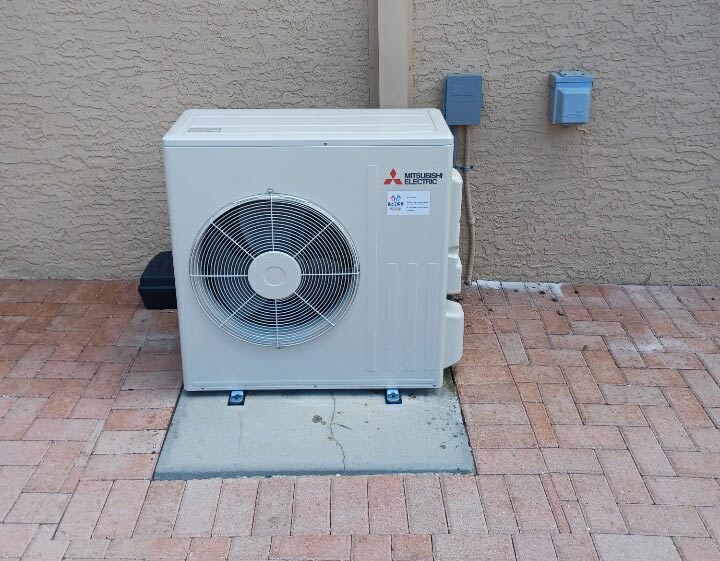
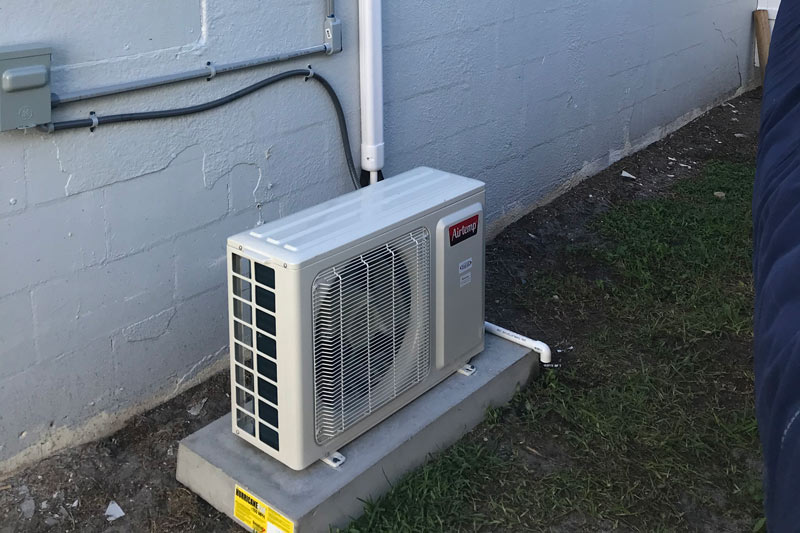
Wabasso’s geography produces two distinct HVAC environments within a relatively small area, and the homes here reflect both of them. Properties close to the Indian River Lagoon deal with the kind of persistent, moisture-saturated air that keeps relative humidity elevated even late into the night and introduces dissolved salt and organic compounds into the air that contacts outdoor equipment. Homes on the western side of A1A and further inland sit in a drier but hotter open-land environment where agricultural activity, scrub vegetation, and minimal shading combine to create conditions that stress outdoor units differently. Many of the homes throughout Wabasso were built between the 1960s and the early 1990s, a range that spans several generations of construction quality and duct system design. Here is how those two environments tend to manifest in the repair calls we take:
Knowing which of these environments a specific property sits in, and how the home’s construction era interacts with those conditions, is what allows us to diagnose accurately and recommend repairs that hold up under the actual pressures the system faces every day.
A service call in Wabasso requires us to read the property before we read the equipment. Where the home sits relative to the lagoon, how old the construction is, how the air handler is installed, and where the line set runs are all factors that shape what we are likely to find and how we approach the repair. We do not skip those questions to get to the part where we start replacing components. Here is what a full heat pump repair visit from Bates Air and Heat covers in this community:
We offer maintenance agreements that are well suited to Wabasso’s dual-environment character. Whether your property sits close to the lagoon or further inland, having a scheduled inspection each year is what keeps the wear curve from getting ahead of you between service calls.
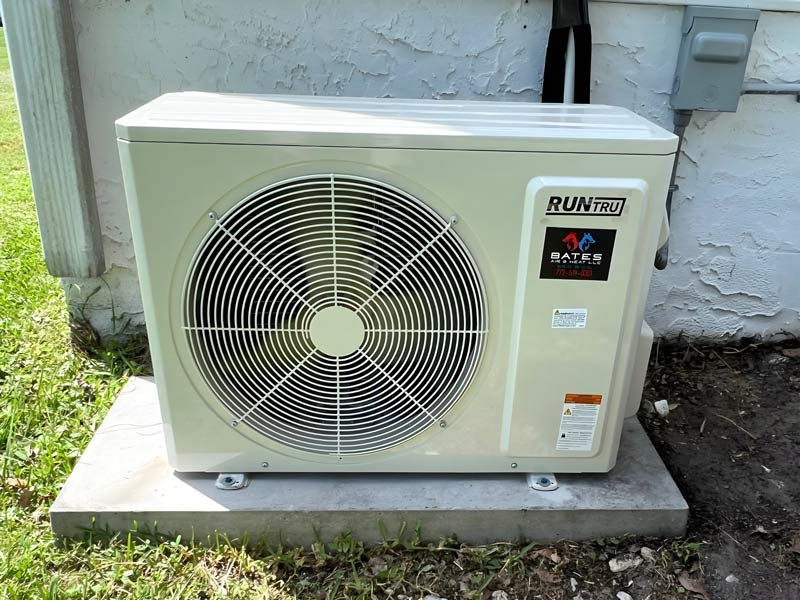
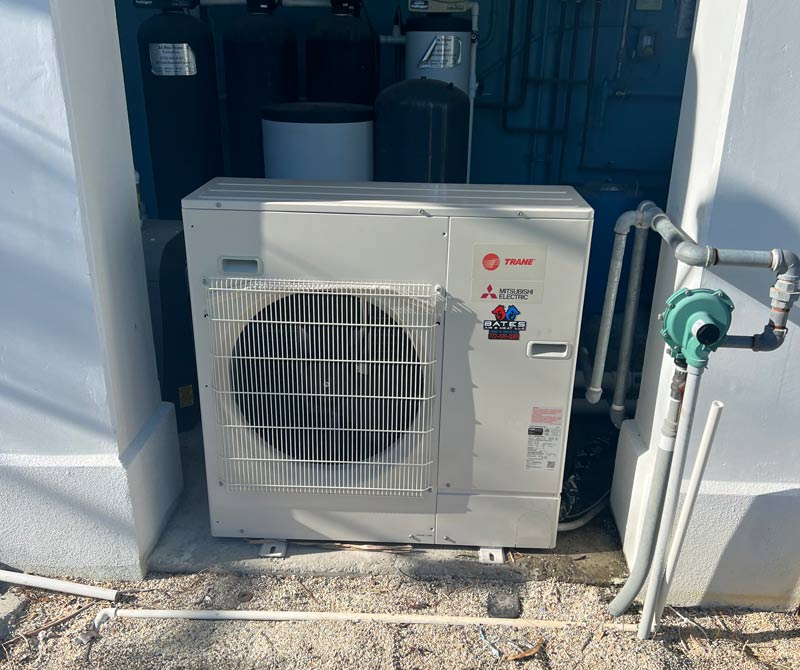
We took a call in late spring from a homeowner named Terrence who lives on the lagoon side of A1A in Wabasso. He had noticed over the previous several weeks that the house felt muggy regardless of the thermostat setting, and that the system was running through very long cycles without the indoor air ever feeling truly dry or comfortable. The temperature reading on the thermostat looked reasonable, but the way the air felt told a different story. When we arrived and opened the air handler, the evaporator coil had a significant layer of biological growth across most of its surface, the kind of dense, dark fouling that develops when a coil stays wet for extended periods in a high-humidity environment. The system was hitting the temperature set point, but the fouled coil surface had lost so much latent heat capacity that it was no longer pulling meaningful moisture from the air. That is a condition where the thermostat reads fine and the system runs fine but the home feels miserable, and it is one of the more commonly misdiagnosed problems we encounter in lagoon-adjacent properties. We cleaned the coil thoroughly, treated the drain system, and tested the refrigerant charge while we had everything open. The charge was within range, which confirmed the coil fouling was the sole driver of the dehumidification failure. Terrence said the difference was noticeable within the first hour of the system running on a clean coil. He also mentioned that a previous technician had told him the system was operating normally during a visit the prior season. Technically it was. But a system that cannot dehumidify properly in Wabasso is not performing correctly for the environment it is in, and that distinction matters.
Wabasso is a community where the landscape changes meaningfully depending on which direction you look from the middle of A1A, and the HVAC needs of the homes here change with it. Bates Air and Heat is veteran-owned, and the preparation and accountability we bring to every call reflects that background. We do not show up with a single approach and apply it regardless of what the property actually presents. We pay attention to where we are, what the environment is doing to the equipment, and what the home’s history suggests we are likely to find. When you call us from Wabasso, here is what you are signing up for:
Wabasso has the kind of community character that makes it worth taking care of, and every call we take here is one more opportunity to do this work the way it ought to be done.
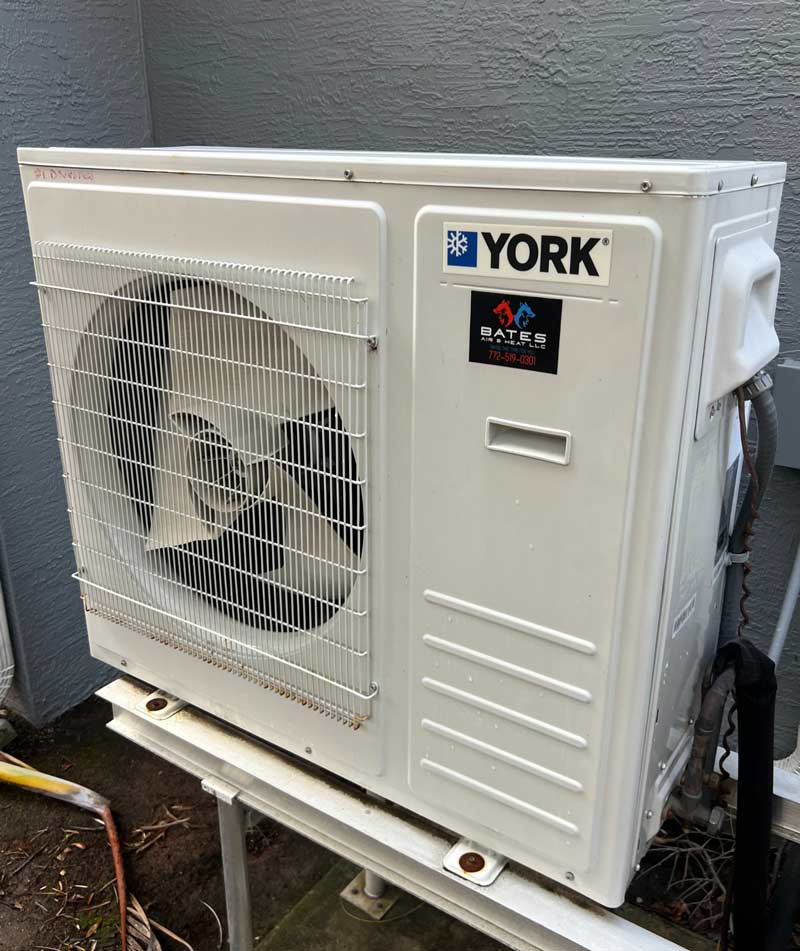

A heat pump manages two separate functions: temperature and moisture removal. In lagoon-adjacent communities like the waterside sections of Wabasso, a fouled evaporator coil or a system running on a shortened cycle can hit the target temperature while losing most of its ability to pull humidity from the air. The result is a home that reads correctly on the thermostat but feels damp and uncomfortable to live in. It is one of the more common findings we make in high-humidity environments and one that requires opening the system up to properly diagnose.
It matters quite a bit for how we approach the diagnostic. Lagoon-side properties deal primarily with biological coil fouling, moisture-driven refrigerant line corrosion, and elevated dehumidification demand. Inland properties are more likely to present with agricultural particulate fouling on the condenser coil, heat stress from open-land sun exposure, and duct system issues from larger attic spans. Knowing which environment we are working in shapes everything from what we look for first to which cleaning methods we use.
More often than most homeowners realize, and the timeline depends heavily on the humidity conditions the system operates in. In a lagoon-corridor community like Wabasso, an original drain pan from a 1970s or 1980s installation has been cycling through wet and dry conditions for decades and often develops seam rust and hairline seepage well before it produces an obvious overflow. We evaluate drain pan condition during service visits and are direct about when replacement is the more sensible path compared to continued patching.
Low-voltage wiring connections at thermostat terminals and control boards are small contact points that corrode gradually when exposed to sustained humidity over many years. The corrosion increases electrical resistance at the connection, which can cause intermittent control failures that are difficult to reproduce during a service call but show up consistently in daily use as erratic cycling, failure to start, or thermostat readings that do not match system behavior. Testing the terminals directly rather than just checking operational function is the only reliable way to identify this kind of fault.
Absolutely, and it is something we see in lagoon-adjacent communities with some regularity. A system can meet basic operational standards on a diagnostic check while still failing to deliver adequate dehumidification for the moisture load a place like Wabasso generates. Evaluating performance against the actual demands of the environment rather than just against a generic operational threshold is part of what makes a diagnostic in a place like this more involved than a standard suburban service call.