

Bates Air & Heat LLC
Heat Pump Repair in South Beach, FL
Contact Us Today
South Beach, FL is Vero Beach's southernmost barrier island community, where the Atlantic Ocean sits on one side and the Indian River Lagoon on the other, and the strip of land between them is narrow enough that the salt air never really lets up. It is a quieter, more private stretch of the island than the areas further north, with a mix of single-family homes and smaller residential properties that share one thing in common: HVAC equipment that is operating in some of the most corrosive outdoor conditions Indian River County has to offer. Bates Air and Heat is a veteran-owned company that takes calls in South Beach knowing exactly what the environment here does to a heat pump, and we come prepared to deal with it properly rather than work around it.
When the Ocean Air Starts Winning
Salt air corrosion is a slow process that does not announce itself until it has already done real damage. By the time a heat pump in South Beach shows obvious symptoms, the underlying deterioration has often been underway for a season or more. Recognizing the earlier, quieter signals is what gives you the best chance of a manageable repair rather than an emergency replacement conversation. These are the ones worth taking seriously:
- The system has gradually lost its ability to reach the set temperature during the hottest part of the afternoon, a shift that happened slowly enough that it was easy to attribute to unusually hot weather rather than a mechanical problem.
- There is a faint but persistent chemical or metallic smell when the outdoor unit is running, which can indicate electrical components under stress from moisture and salt exposure.
- The outdoor unit's fins have developed a dull, chalky appearance rather than the cleaner metallic look they had when the equipment was newer.
- Cooling cycles have become noticeably shorter and more frequent, with the system kicking on and off in rapid succession rather than running through full, sustained cycles.
- You have noticed condensation forming on supply registers or around the air handler that was not there in previous seasons.
- The system's performance seems to drop off sharply on days when the onshore breeze is stronger, which points directly to salt-accelerated component stress rather than a load or sizing issue.
South Beach's narrow barrier island setting means there is nowhere for the salt air to go except through and around your outdoor equipment every single day. The window between early warning and active failure is shorter here than in most other parts of the county.
The Physics of Living on a Narrow Barrier Island
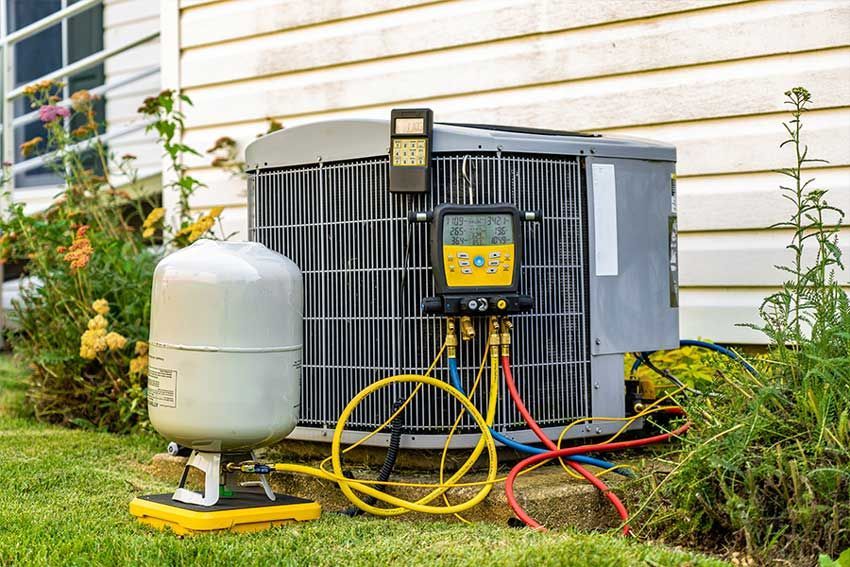
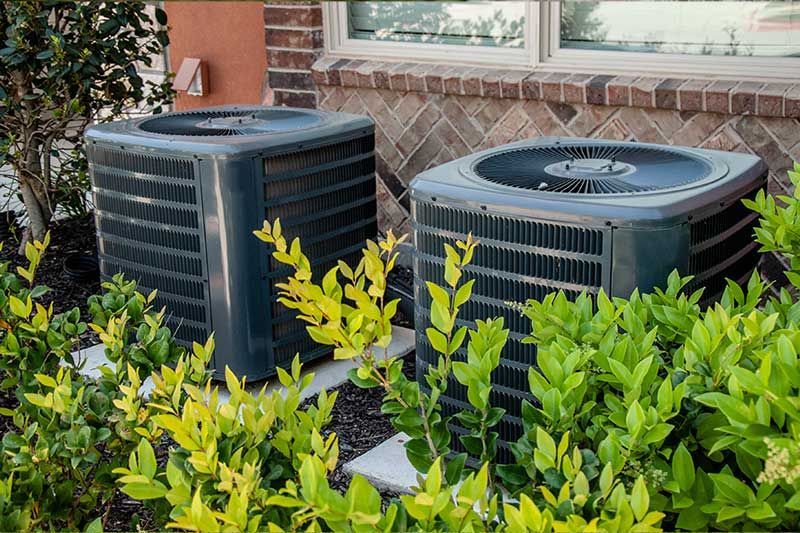
South Beach occupies one of the narrowest sections of the barrier island south of Vero Beach proper, which means outdoor HVAC equipment here has essentially no buffer from ocean exposure regardless of where on the property it is installed. Units on the east side of a home face direct Atlantic salt air. Units on the west side draw air that has already crossed the length of the property and still carries significant chloride content. The Indian River Lagoon on the western edge adds its own layer of persistent humidity that keeps moisture levels elevated even when the ocean breeze dies down overnight. Homes in this community range from older concrete block construction from the 1960s and 1970s to more recent builds and renovations, and each generation of construction carries its own set of HVAC vulnerabilities under these conditions. The failure patterns we encounter most consistently in South Beach include:
- Condenser coil aluminum fin deterioration that progresses faster here than in any other community we service in Indian River County, driven by the unobstructed salt air exposure on both the ocean and lagoon sides of the island.
- Refrigerant circuit integrity problems stemming from chloride-accelerated pitting at brazed joints and flare connections that develop into active leaks well ahead of what the equipment's age would normally suggest.
- Control board failures inside the air handler from humidity infiltration through gaps in older cabinet construction, where the combination of ocean air and lagoon moisture keeps interior relative humidity consistently elevated.
- Outdoor disconnect boxes and electrical compartments with severe internal corrosion from moisture that has worked past degraded gaskets and seals over multiple seasons of salt air exposure.
- Line set insulation that has been compromised by UV exposure and salt-laden moisture along exterior wall runs, leaving copper tubing sweating against structural surfaces and creating conditions for secondary moisture damage inside the wall.
- In older homes, original galvanized steel duct sections that have developed internal rust scaling, which sheds into the airstream and deposits on coil surfaces downstream, compounding the fouling that salt air already promotes from the outside.
South Beach's environment does not give equipment a single day off from the pressure it applies. A repair approach that does not account for every one of those exposure points is going to leave the next failure already in progress when the current one gets fixed.
Repairs Built for Where You Actually Live
Servicing a heat pump in South Beach requires a different level of preparation than a standard residential call. We know before we arrive that salt air exposure is a variable in whatever we are going to find, and we bring that expectation into every part of the diagnostic and repair process. We do not patch the presenting problem and leave the corrosion conditions that caused it unaddressed. Here is the full scope of what our heat pump repair services cover in this community:
- System diagnostics with explicit corrosion assessment at every external surface, electrical connection, refrigerant fitting, and accessible interior component, documented so you have a clear picture of where things stand beyond just today's repair.
- Condenser coil evaluation that distinguishes between surface fouling that cleaning can address and structural fin deterioration that has advanced past the point where cleaning restores meaningful performance.
- Refrigerant circuit integrity testing with methods calibrated for the pitting and joint failures specific to coastal copper exposure, including areas that standard electronic leak detectors can miss.
- Electrical compartment inspection and restoration, including terminal cleaning, gasket and seal assessment, and component replacement for contactors, capacitors, and control elements showing moisture-driven wear.
- Line set and insulation evaluation along the full accessible run, with replacement of sections where salt and UV exposure have broken down the material protecting the copper beneath.
- Air handler cabinet inspection for humidity infiltration, control board condition, and in older homes, galvanized duct assessment for internal rust scaling that may be affecting downstream coil condition.
- Condensate system service sized to the volume demands of a home processing coastal humidity year-round, including full clearing, pan inspection, and biological treatment.
We offer maintenance agreements to South Beach homeowners with the strong recommendation that they be taken seriously. In an environment this aggressive, annual inspection is not a precaution. It is the minimum interval that makes sense given the pace at which salt air works on exposed equipment.
A Call at the Southern End of the Island
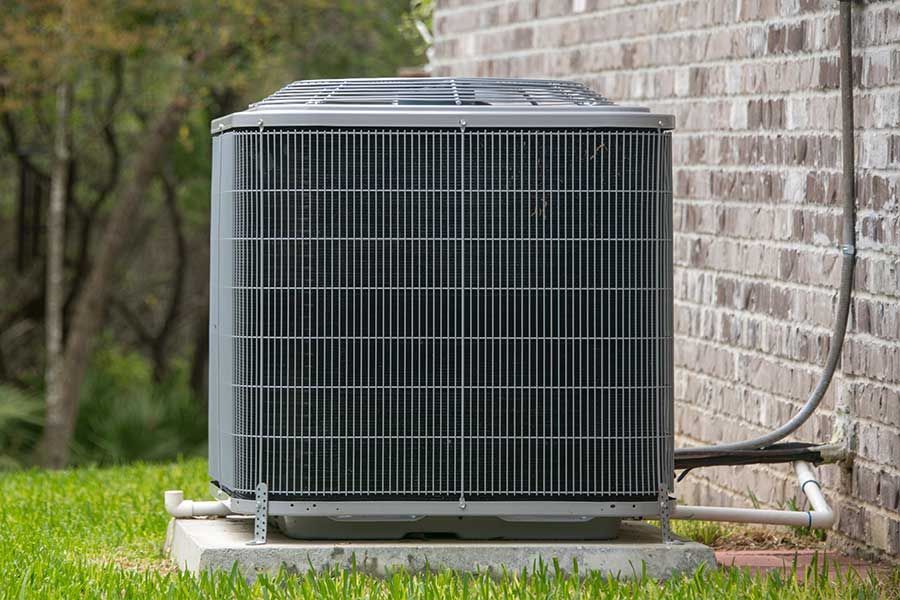
We received a call last summer from a homeowner named Frank who lives near the southern tip of South Beach. He had owned the property for several years and had always kept up with basic maintenance, but over the course of one particularly hot stretch in July he noticed the system was running almost around the clock without the house ever feeling genuinely cool. He had also seen the outdoor unit cycling off sooner than expected during operation and starting back up again within a couple of minutes.
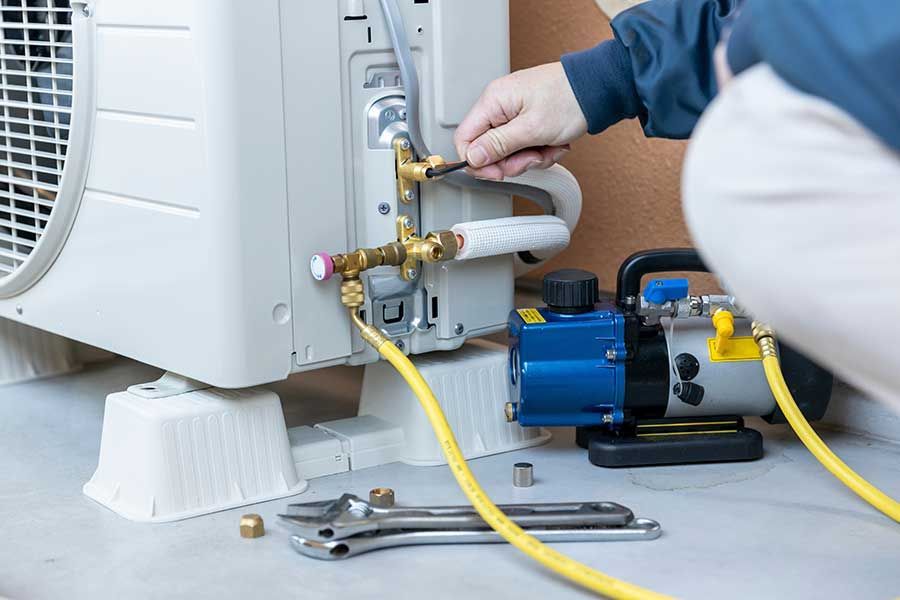
When we arrived and pulled the diagnostic, the condenser coil had deteriorated significantly on the ocean-facing side of the unit where direct salt air exposure was heaviest. The fin structure on roughly the lower half of that face had collapsed to the point where it was no longer contributing to heat transfer. The refrigerant charge was also low from a leak at a flare fitting on the suction line, and the contactor inside the outdoor electrical compartment had pitted contact surfaces that were causing the premature cycling Frank had noticed.
We replaced the condenser coil, repaired the fitting, recharged the system to specification, and replaced the contactor while the unit was already open. We also applied a protective coil coating to the new condenser coil surface to slow the rate at which salt air would work on the replacement. Frank asked why the coating had not been applied to the original coil when the unit was installed. It is a fair question, and the honest answer is that protective coatings on coastal equipment should be standard practice but often are not. We make a point of recommending them every time we put new coil hardware into a South Beach home.
A Company That Knows This Stretch of Island
South Beach is not a community where you want to hand your HVAC system to someone who is going to treat it like any other residential call. The environment here demands specific knowledge, and Bates Air and Heat brings that knowledge to every job we take in this neighborhood. We are veteran-owned, which means we approach this work with a standard of accountability that does not bend based on how complicated or inconvenient a job turns out to be. When you call us in South Beach, here is what that commitment looks like in practice:
- A diagnostic process that treats coastal corrosion as an active participant in the system's condition, not an afterthought, and documents what we find so you have a real picture of where your equipment stands.
- Emergency availability for when the heat pump stops working and the barrier island summer makes waiting a genuinely difficult proposition.
- Honest guidance on the difference between a repair that restores full function and one that is buying time on a system whose core components have reached the end of their serviceable life in this environment.
- Protective measures recommended alongside every repair, including coil coatings and electrical compartment sealing, because fixing what failed without addressing the conditions that caused it is only half a job.
- Maintenance agreements structured for the pace of coastal wear, with inspection intervals that reflect what salt air actually demands rather than what a standard suburban service schedule assumes.
South Beach is a demanding environment for any piece of mechanical equipment, and the homeowners here deserve a repair company that understands that from the moment they pick up the phone. That is what we show up to deliver every time.
Frequently Asked Questions
CHECK OUT THE OTHER HVAC SERVICES WE PROVIDE IN West South Beach, FL
or call us at: